Building Preservation in the 1970s – Controversies and Developments
Writer: Maire Mattinen
Published: 27.8.2026
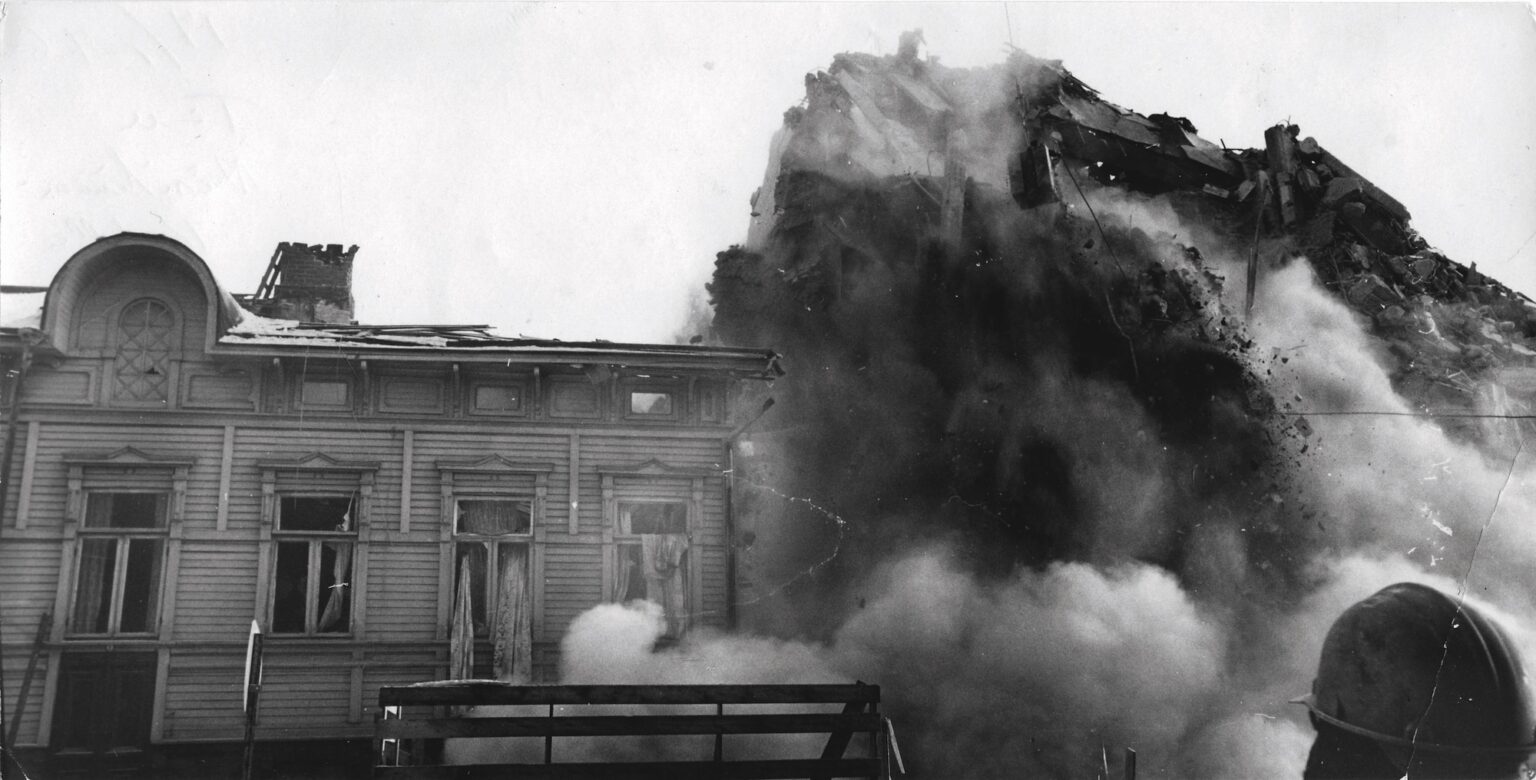
The 1960s and 1970s are remembered as a period when an unprecedented number of buildings were demolished in Finland. It has since been described as the most intensive period of demolition, from which even Neo-Renaissance and Art Nouveau buildings – now widely regarded as valuable cultural heritage – were not spared. There was talk of the ‘Turku disease’, and areas such as Puu-Käpylä in Helsinki and Pispala in Tampere would have been lost had it not been for various groups of citizens and the architectural community rising up to oppose what seemed an inevitable trend.
In her article, Maire Mattinen examines this period in Finnish architectural history, which also led to the protection of buildings, as well as that of wider neighbourhoods and industrial environments, gaining legal status and becoming an established part of the development of the built environment. The article is highly topical, as the pace of demolition in Finland in the 2020s has been even more intense than it was 50 years ago. At the end of his article, Mattinen asks: ‘In the midst of today’s demolition frenzy, how can we draw on the experiences of the 1970s to avoid going too far?
Should we not learn from how, at that time, we managed to curb the wave of demolition whilst operating under the threat of an energy crisis and recession, and from the realisation that our existing everyday environment is a valuable resource, even if this appreciation is not yet widely shared?’
The Architecture and Design Museum Helsinki is publishing this article to honour the life’s work of Maire Mattinen, who passed away suddenly on 8 September 2025, in the field of building conservation. The article was previously published in the museum’s book A Decade of Change: Everyday Life, Ideals and Architecture in 1970s Finland in 2023.