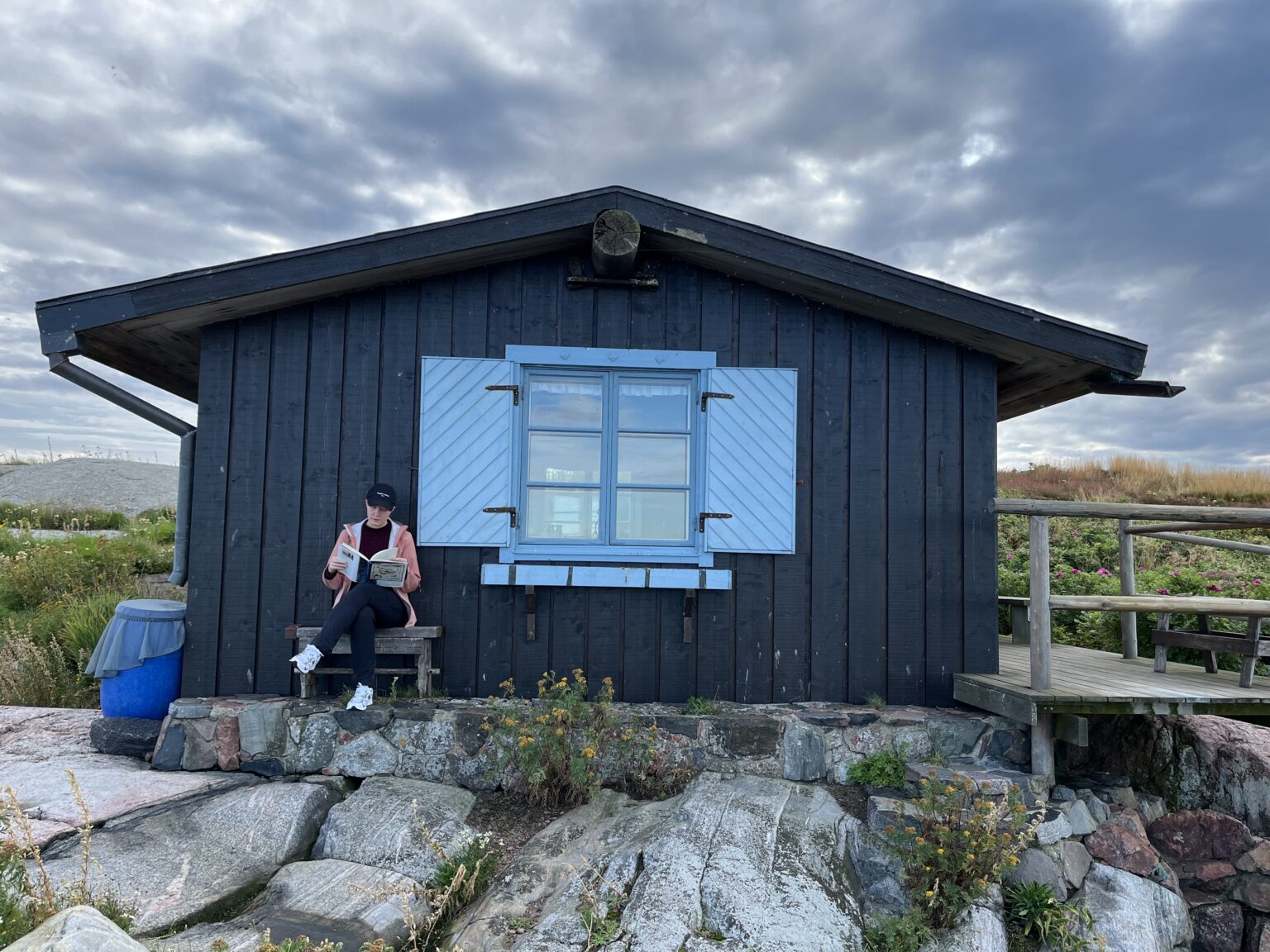
In the summer of 2025, Jutta Tynkkynen, curator of the Escape to Moominvalley exhibition, had a rare opportunity to immerse herself in the life of Tove Jansson through a writing residency on the island of Klovharun. This small, rugged island in the outer archipelago and the modest cabin built there were an important refuge for Jansson and her partner, Tuulikki Pietilä, for decades.
Alongside her work on the exhibition, Tynkkynen has been researching and writing an article on Tove Jansson’s relationship with architecture. Her stay on Klovharun offered a welcome chance to focus solely on writing, free from the constant noise and distractions of modern communication.
The residency was made possible through the Pellinki Local Heritage Association, which now owns the island and cares for the cabin. The one-week residency provided Tynkkynen with a unique opportunity to continue exploring themes related to the exhibition. Escape to Moominvalley opened to the public in October 2025.
“Being able to visit Tove and Tuulikki’s summer home was an extraordinary experience. Although I had studied their lives extensively through archival sources, letters, and photographs while preparing the exhibition, nothing fully prepared me for what it felt like to inhabit a place they had once lived in. It was only on the island that I truly understood how isolated, yet at the same time how free, they were there,” says Tynkkynen.
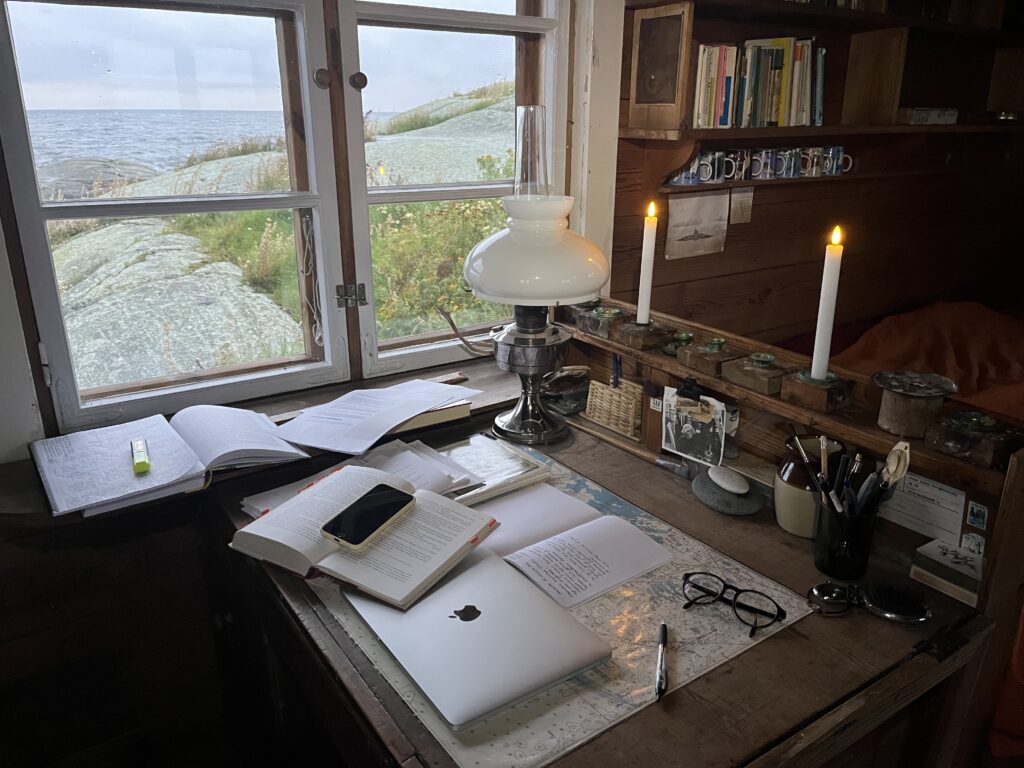
The cabin, along with most of its furnishings and belongings, remains largely as Jansson and Pietilä left it. There is no electricity on the island, nor is there running water.
Kuvat: Jutta Tynkkynen
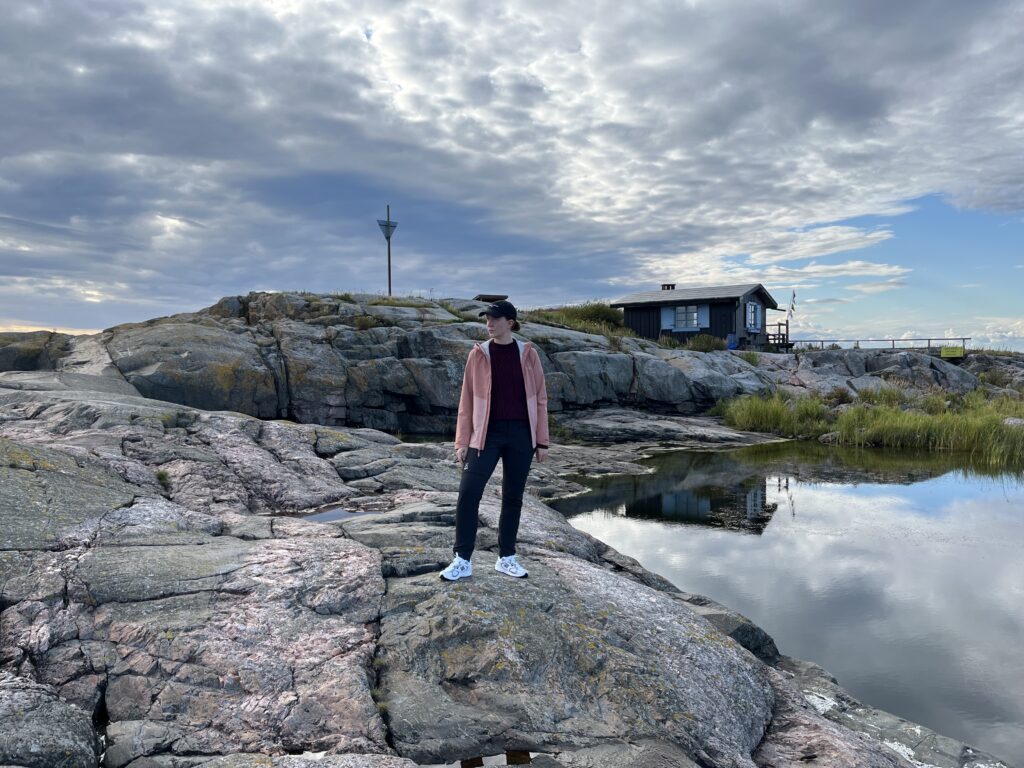
“There is very little on the island that could be described as unnecessary, and that is precisely part of its charm. The atmosphere was both peaceful and intensely present. The direction of the wind and the weather determined the rhythm of each day. I felt that in an environment like this, it is remarkably easy to immerse oneself in creative work,” Tynkkynen explains.
“Above all, visiting the island offered a spatial understanding of the place. My research had already shown that Tove and Tuulikki built the Klovharun cabin together with architect Raili Pietilä. However, it was only when standing there that it became possible to see how carefully the cabin was fitted into its surroundings, how every view forms an integral part of the building, and how it lives in constant interaction with the forces of nature,” she continues.
According to Tynkkynen, the week-long writing residency in the landscapes of Klovharun brought her closer to Jansson’s way of observing the world.
“When you spend time in a place where your attention is inevitably drawn to the weather, the sea, the birds, and the changing light, you begin to understand more clearly why the archipelago played such a significant role in her books, paintings, and way of thinking.”
The Escape to Moominvalley exhibition presents not only the architecture of Moominvalley but also real places that were central to Tove Jansson’s life. Particular attention is given to Klovharun in the Pellinki archipelago and to Jansson’s artist home and studio in the Ullanlinna district of Helsinki.
“As a curator, I have been especially interested in how Tove created environments that made creative work possible. At the same time, my understanding of the importance these places held for her has deepened. Klovharun, like her studio home, was an intentionally created refuge where creative work, friendship, love, and freedom were given room to flourish. That is what makes these places so moving even today.”
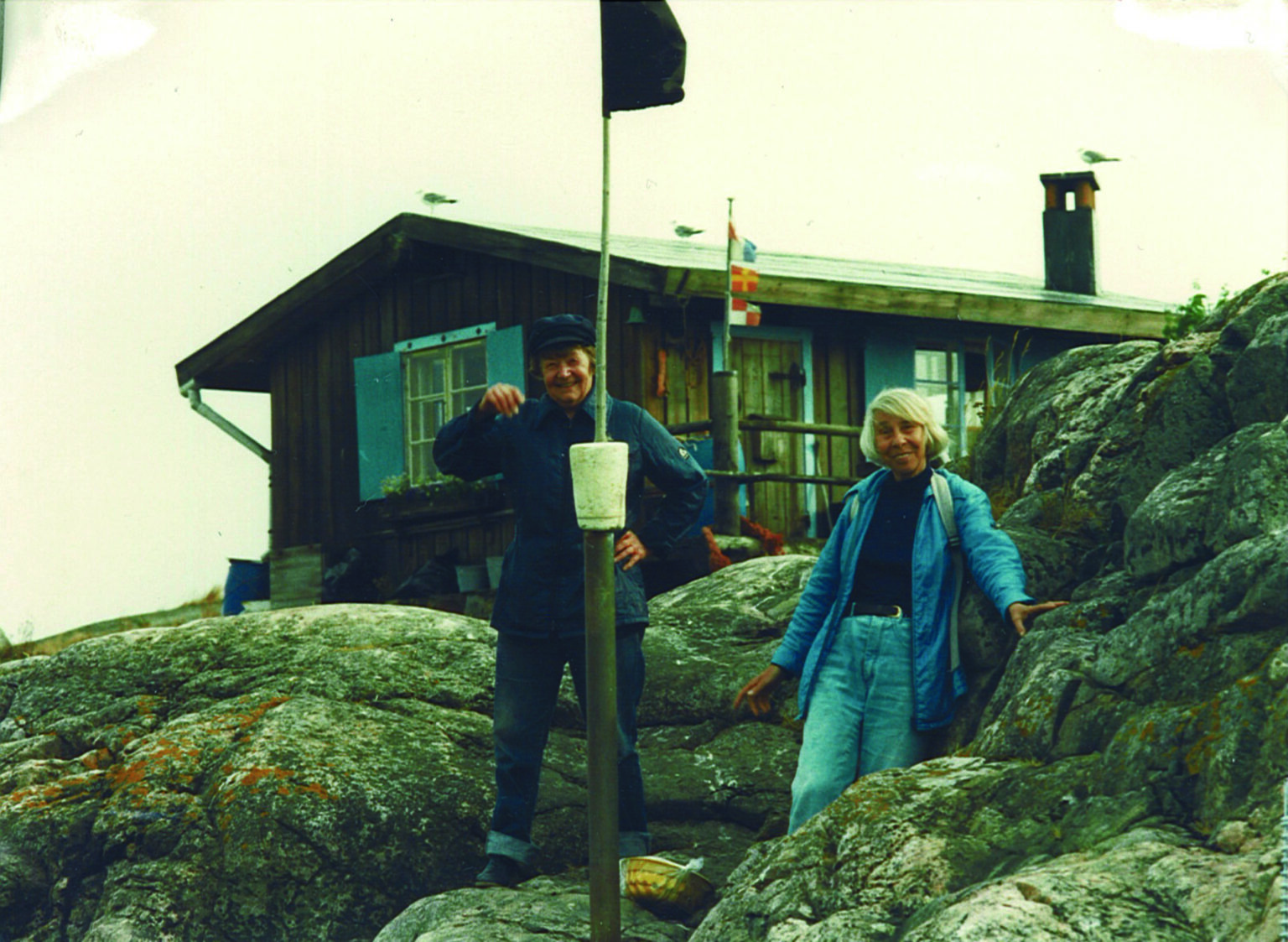
Tuulikki Pietilä and Tove Jansson at Klovharun © Moomin Characters™
Tynkkynen’s article, Studio Utopias and Places of Escape: Tove Jansson and Architecture, has now been published and is available in Finnish on the Museum’s Explore platform.