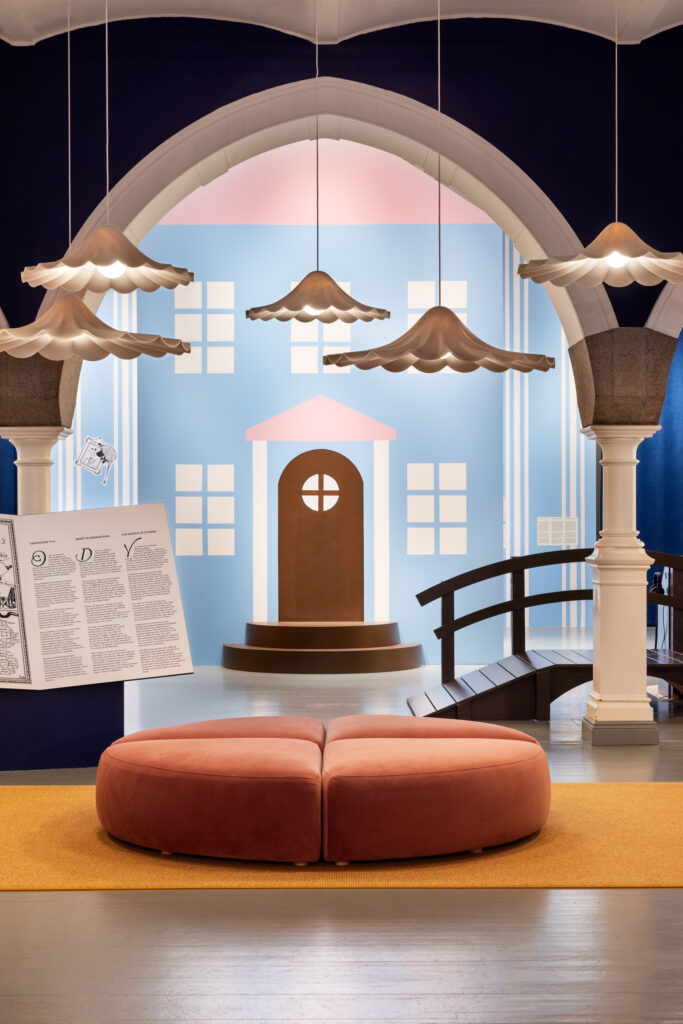
Our collection exhibition Utopia Now has been closed and a new exhibition is currently being built in its place.

Textile artist Vuokko Nurmesniemi has passed away

The textile artist and designer Vuokko Nurmesniemi has passed away at the age of 96. She was one of the most significant figures in Finnish design and an internationally recognised pioneer of textile and fashion design.

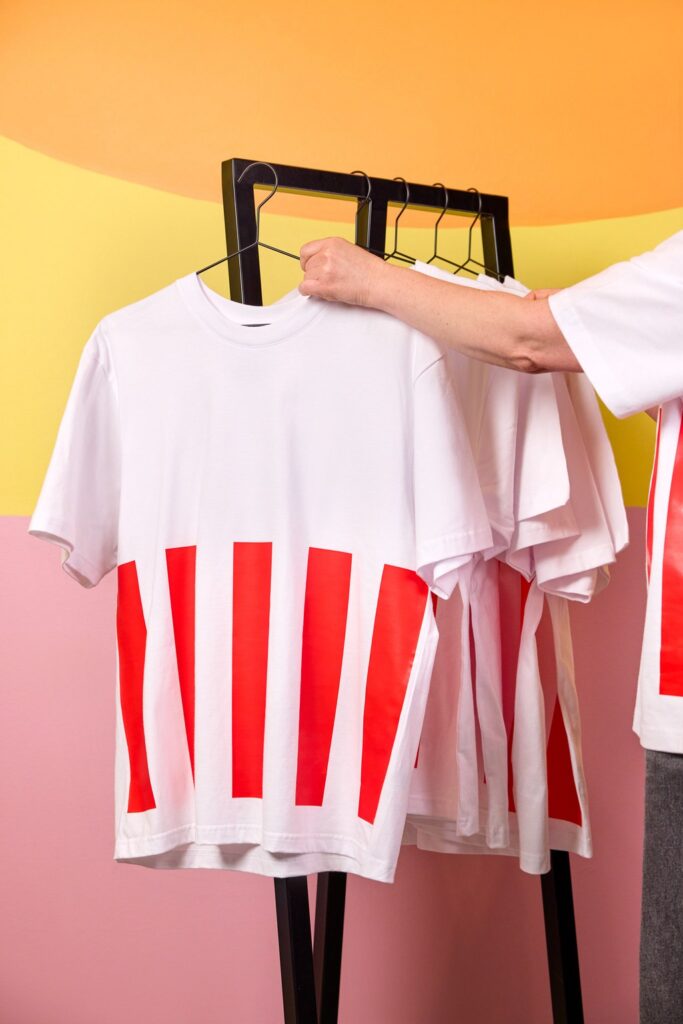
Nurmesniemi is especially known for her work at Marimekko in the 1950s, where she played a key role in shaping the company’s visual identity during its international breakthrough. Her iconic designs, such as the striped Jokapoika shirt, have become enduring classics of Finnish design.

Born in Helsinki in 1930, Nurmesniemi studied ceramics at the Institute of Industrial Arts (Taideteollinen oppilaitos). Encouraged by Marimekko’s founder Armi Ratia, she moved into fashion and textile design. She began as a printed textile designer at Printex in 1953 and soon transitioned to a clothing designer at Marimekko, where she worked as a designer from 1953 to 1960. Nurmesniemi established her own company, Vuokko Oy, in 1964.

Nurmesniemi’s design philosophy emphasised clarity, functionality, and timelessness. Her work challenged conventions of fashion and contributed to redefining modern clothing for everyday life. Her garments were worn internationally, including by Jacqueline Kennedy, which further increased global interest in Finnish design.

Throughout her long career, Nurmesniemi remained committed to sustainable and enduring design. She received numerous awards and honours, including the title of Academician of Arts in Finland.

Vuokko Nurmesniemi’s life’s work has had a lasting impact on Finnish and international design culture. Her legacy continues through her distinctive body of work and the enduring influence of her ideas.

“There is no fashion, only time.” – Vuokko Nurmesniemi

Design Museum’s Antti + Vuokko Nurmesniemi exhibition, 2022–2023. Vuokko Nurmesniemi, Pyörre fabric, 1964, Vuokko Oy. (Photo: Paavo Lehtonen)

Myllynkivi dress, 1967; Pyörre printed fabric, 1964. Photographed in the atelier home in Kulosaari in 2022. (Photo: Paavo Lehtonen)

Donations to the museum collections since the 1990s

Vuokko Nurmesniemi had a close relationship with the Architecture & Design Museum. Already in the early 1990s, she donated a significant collection of garments and textiles to the museum’s collections.

A major exhibition of Nurmesniemi’s work was held at the Design Museum in 2007. More recently, in 2022–2023, the museum presented the Antti + Vuokko Nurmesniemi exhibition, which highlighted the breadth of the designer’s career and her significance to Finnish design. The exhibition was greatly loved by the audience for its versatile approach.

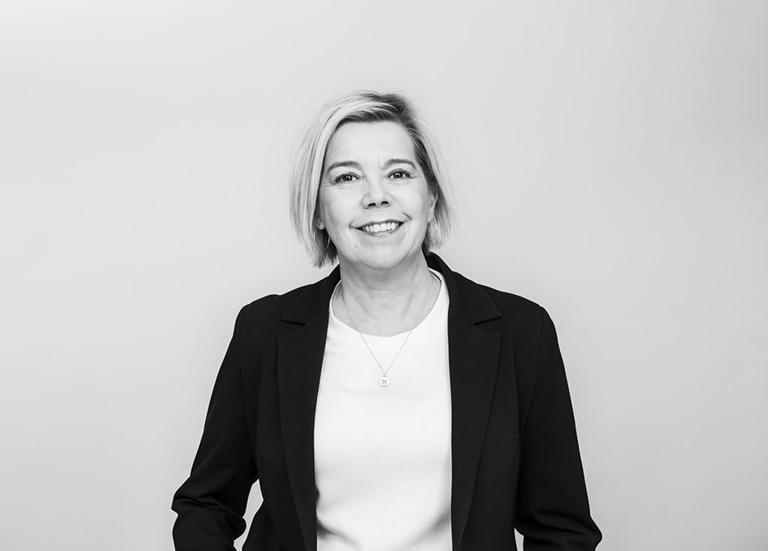
Main photo: Vuokko Nurmesniemi (Max Petrelius)

Design Museum’s Antti + Vuokko Nurmesniemi exhibition, 2022–2023. Dresses designed by Vuokko Nurmesniemi, Iso-4-Raita fabric, 1973, Vuokko Oy. (Photo: Paavo Lehtonen)

Vuokko Nurmesniemi and the Kakemono printed fabric, 1957. (Antti Nurmesniemi Archive)

From the Design Museum’s Antti + Vuokko Nurmesniemi exhibition, 2022–2023. Jokapoika shirts, 1956, in Piccolo fabric, 1953, Vuokko Nurmesniemi, Marimekko. (Photo: Paavo Lehtonen)

A new exhibition takes shape after Utopia Now

The Utopia Now collection exhibition, which opened in 2017 as part of Finland’s centenary celebrations, has closed on Sunday 12 April. This much-loved exhibition has offered new perspectives on Finnish design while also challenging established narratives. Since last year, the exhibition has been further enriched with Finnish architecture.

From the beginning of June, the first floor will be taken over by the exhibition Aalto Design – Forms of Wellbeing, which explores the thinking on wellbeing of some of the most renowned figures in Finnish architecture and design: Aino, Alvar and Elissa Aalto.

At Utopia Now, visitors have also been able to immerse themselves in the Finnish Pavilion at the 1900 Paris World’s Fair, which marked a breakthrough moment for Finnish design, art and architecture in an international context.

The exhibition has explored the essential role of the design fields in the development of the Finnish welfare state, while presenting designers, processes and end products in a human and accessible way. Exhibitions in the changing gallery space have critically examined the museum’s collection and renewed interpretations of it.

In 2020, the changing exhibition space featured Endless Rhythm, an installation by artist Caitlin Yardley, which examined form and movement through Aino Aalto’s Bölgeblick series (1932) dinner plate.

Utopia Now has also served as a versatile learning platform for school and daycare groups, offering visitors a gateway into the world of design learning. Alongside the exhibition, a digital collection presenting the holdings of the then Design Museum was published, expanding the exhibition experience and enabling access to the collections beyond the museum walls.

Industry Muscle Promo Video Wins Award at Voitto

The promotional video for the Industry Muscle exhibition presented in Venice has won first prize in the Music and Sound Design category at the Finnish advertising film competition Voitto.

The best advertising films of 2025 were awarded at the Voitto Gala held at the Old Student House in Helsinki on Friday, 6 March 2026. The jury praised the video in particular for its strong understanding of the dramaturgical power of sound.

The award-winning video served as the international promotional material for the Industry Muscle exhibition, highlighting its key themes through powerful audiovisual storytelling.

The Voitto competition annually honors the best creators and productions in Finnish advertising film.

The Architecture and Design Museum produced the exhibition Industry Muscle: Five Scores for Architecture for the Nordic Pavilion at the 19th International Architecture Exhibition of La Biennale di Venezia. The Biennale was open to the public from 10 May to 23 November 2025.

Created by performance artist Teo Ala-Ruona together with their working group, the exhibition examined the modern built environment from the perspective of the trans body. Combining architecture, performance art, and installation, the project proposed five exercises for the architecture of the future. The exhibition was curated by architect Kaisa Karvinen.

The video was filmed at a concrete factory in Helsinki, where the exhibition installation was built from concrete, steel, and an old sports car. The video also offered a first glimpse of the performance presented in Venice. The performers are Ala-Ruona, Kid Kokko, and Caroline Suinner.

The video was produced by Cocoa and directed by Taito Kawata, whose previous work includes the Netflix series Dance Brothers.

Video Production Team

Director – Taito Kawata
Executive Producer – Ilona Malinen
Music & Sound Design – Akseli Soini / El Camino
Music & Sound Design – Petja Virikko / El Camino
Sound Design / Original score for Industry Muscle: Tuukka Haapakorpi
Director of Photography – Tuomas Nurmi
Production Manager: Samuli Hilkamo
Production assistant: Juuli Nyberg
Production Assistant / Gaffer – Eemi Lehto
Light Technician – Tiia Hyyryläinen
1st Assistant Camera – Henrik Leppänen
Hair & Makeup – Emma Janhonen
Grip – Oskari Jokinen
Grip Assistant – Pepe Uimonen
Set Design – Teo Paaer
VFX Artist – Juho Lähdesmäki
Colorist – Joni Kuusisto

Performers
Teo Ala-Ruona
Caroline Suinner
Kid Kokko

Special Thanks
Jan Tuomisto / Studio Lupara Oy
Angel Rentals / Roope Ruuska
Bongobongo / Joonas Saine
Vihdin Betoni Oy

Production Company
Cocoa (@wearecocoa)

Upcoming exhibition explores Aalto architecture and design through wellbeing

Aalto Design: Shapes of Wellbeing  
5 June 2026 – 3 January 2027  

In summer 2026, the Architecture and Design Museum Helsinki will present the architecture and design of Alvar, Aino and Elissa Aalto. The multidisciplinary exhibition Aalto Design: Shapes of Wellbeing boldly asks what these classics can contribute to contemporary discussions on the design of wellbeing.  

Opening in June 2026 at the Architecture and Design Museum, Aalto Design: Shapes of Wellbeing invites visitors to explore the Aaltos’ legacy from the perspective of wellbeing.

 The exhibition highlights wellbeing as the Aaltos’ major contribution to Western architectural modernism and examines how their work and philosophy approach it as a balance between people, nature, the built environment, and materials. It connects the Aaltos’ idea of holistic wellbeing with contemporary thinking and the growing desire to understand wellbeing as extending beyond the individual to concern the whole planet.  

The exhibition is produced by the Architecture and Design Museum and curated by the Head of Research Petteri Kummala and the Exhibitions Curator Jutta Tynkkynen. The museum’s newly appointed Chief Curator, Carson Chan, has served as curatorial advisor. The curatorial concept brings together a diverse dialogue of presentation methods and materials, including drawings and scale models, furniture, glass objects and material experiments, as well as artworks. The exhibition also features rarely displayed items from the museum’s collections. 

Museum Director Pilvi Kalhama’s vision has been to introduce diverse modes of storytelling and presentation that encourage new interpretations of familiar materials. The exhibition includes, among other works, the multi-channel video installation Other Actors (2025) by London-based artist and researcher Ilona Sagar. The work explores the relationships between body and building, and between health and architecture, at the Paimio Sanatorium designed by the Aaltos.

“On our journey towards a new Architecture and Design Museum, we want to find ways to experience and interpret architecture and design in experiential and multidisciplinary ways,” says Pilvi Kalhama.

The Aalto Lounge, designed by exhibition architect Linda Bergroth, offers a calm space for rest and reflection and invites visitors to explore how being in a space affects their body and mind in the presence of authentic Aalto objects. The lounge also functions as an experiential meeting and event space available for hire. 

The exhibition is based on works by Alvar, Aino and Elissa Aalto from the Architecture and Design Museum’s collections, supplemented by loans. The exhibition’s partner is the Alvar Aalto Foundation. 

Further information about the exhibition and public programme will be announced at a later date.  

Notes for editors

Alvar Aalto (1898–1976) was a Finnish architect and designer who rose to iconic status both nationally and internationally. He is known as a key pioneer of humane modernism. Aalto’s architecture has been proposed for inclusion on UNESCO’s World Heritage List, with a decision expected in 2026.

Aino Marsio-Aalto (1894–1949) was a nationally and internationally recognized architect, designer, and interior architect, as well as one of the founders of Artek. She worked alongside her spouse as an equal partner in design and, as Artek’s first artistic director, created the company’s distinctive style. As a designer, Aino Aalto is especially known for her glassware.

Elissa Aalto (1922–1994) was a Finnish architect and Alvar Aalto’s longtime collaborator and spouse, who had a significant influence on the operations of Aalto’s office in the postwar period. From the 1950s onward, she played a central role in the firm’s major building projects. After her husband’s death, Elissa led the office, completed unfinished projects, and participated in planning the restoration of Aalto’s buildings.

For materials, images and interview requests

Ilona Hildén 
Communications Specialist 
Architecture & Design Museum Helsinki 
ilona.hilden@admuseo.fi 
+358 443582175 

Image: Other Actors, Ilona Sagar, 2025.

A new exhibition intro introduces the themes of Escape to Moominvalley

From January onwards, the Architecture and Design Museum will host regular exhibition intros for its main exhibition Escape to Moominvalley. The exhibition intros take place weekly on Tuesdays and Saturdays in several languages. The exhibition intros replace the previous open public guided tours of the main exhibition and allow more visitors to take part in these popular guided introductions.

The exhibition intro is a 30-minute guided introduction where visitors can sit back and listen as the guide presents the key themes and stories of the exhibition. A visual presentation combined with the guide’s expertise offers new perspectives and practical tips to help visitors get the most out of the exhibition at their own pace.

Before the exhibition intro begins, visitors have the opportunity to take part in the Escapism Poetry Game, where they can create their own poems and project them onto a screen. A smartphone is required to scan the QR code. Visitors are encouraged to arrive around 15 minutes in advance.

Participation in the exhibition intro is included in the price of a museum ticket.

Up-to-date schedules for the exhibition intros can be found in the museum’s event calendar.

Foundation reaches Endowment Target with Significant Gift

The donation of two million euros from the Louise & Göran Ehrnrooth Foundation has secured the minimum goal for the endowment for the Foundation for the Finnish Museum of Architecture and Design. The returns from the capital assets will provide long-term financial support for the operations of the Museum of Architecture and Design in its new building, set to open in the early 2030s in Helsinki’s South Harbour.

With the commitment from the Louise & Göran Ehrnrooth Foundation, the Foundation for the Finnish Museum of Architecture and Design’s capital endowment has now reached its minimum goal of 150 million euros. The 60 million euro commitments by each of the Foundation’s founders – the Finnish state and the City of Helsinki – create the capital base. An exceptionally strong share of the funding, 30 million euros, has been raised from private sector donors.

Through the donation, the Louise & Göran Ehrnrooth Foundation will become a Founding Partner of the New Museum of Architecture and Design. Other Founding Partners include the Jane and Aatos Erkko Foundation, the Jenny and Antti Wihuri Foundation, the Finnish Cultural Foundation, the Swedish Cultural Foundation in Finland, the Saastamoinen Foundation, and the Centennial Fund of the Finnish Society of Crafts and Design.

The Louise & Göran Ehrnrooth Foundation, established in 1991, supports education and research, environmental protection, culture and social activities in Finland. The foundation annually awards over one million euros in long-term grants and scholarships to innovative pilot projects.

“The New Museum of Architecture and Design is an exceptionally significant initiative. We are excited to support a project that strengthens and showcases the global visibility of Finnish design and architecture, as well as highlights their significance for society, culture and economy. The future museum, located in a landmark setting, will create a new attraction for Helsinki and the whole of Finland. It is an honour for us to help enable the realization of this vision,” says Georg Ehrnrooth, Chairman of the Louise & Göran Ehrnrooth Foundation.

“The Louise and Göran Ehrnrooth Foundation’s donation is a powerful expression of confidence in the future and value of design and architecture within our society. Thanks to this this pivotal contribution, we are ready to take the next steps on the journey towards opening the New Museum of Architecture and Design. We express our warmest gratitude to the Louise & Göran Ehrnrooth Foundation,” says Kaarina Gould, CEO of the Foundation for the Finnish Museum of Architecture and Design.

The New Museum of Architecture and Design

The New Museum of Architecture and Design is expected to open in Helsinki’s South Harbour’s Makasiiniranta district in 2030. The results of the international design competition for the museum’s new building were announced in September 2025. The Finnish architecture firm JKMM Architects, known for their museum architecture, was selected as the winner. The museum’s new home aims to provide a setting for world-class museum activities and to enable the museum’s social mission: shaping our shared future through architecture and design. The new building is being implemented by the Real Estate Company ADM, founded by the City of Helsinki and the Finnish State.

Image: JKMM Architects

Change negotiations at the Architecture & Design Museum have concluded

The Architecture & Design Museum conducted change negotiations in November 2025. The background of these negotiations is a cost-saving target of more than half a million euros for 2026. As a result of the negotiations, six employment contracts will end, and the employment terms of 13 employees will change. 

A wide range of measures was considered during the change negotiations to achieve the savings target. At the start of the negotiations, it was estimated that the savings measures could result in up to 20 employment contracts being terminated. Full terminations were not required, partly due to changes in employment terms. 

In addition to the six contracts ending, the employment terms of 13 employees will change. For example, customer service staff will be offered on-call employment contracts where applicable. The aim of the negotiations was to ensure that the number and structure of personnel will support the organisation’s operational objectives in a purposeful and efficient manner in the future. 

The museum’s difficult financial situation is influenced by several factors, including the merger of the two museums in early 2024, the expected reduction of public grants in the coming years, and the decline in visitor numbers and other self-generated income. 

‘Our visitor numbers have not met expectations, although the autumn exhibitions have attracted a strong audience. In addition, we consolidated our operations into a single museum building this year. For this reason, we encountered a need to reduce staff working during museum opening hours,’ says Museum Director Pilvi Kalhama

Kalhama notes that the savings measures implemented by the museum will not affect the progress of the new museum project. The museum’s finances are expected to improve in 2027, which will enable the development of museum operations in the future. 

‘At present, we are managing and developing the museum’s current operations while simultaneously building the path toward the new museum. In the future, the scale of museum operations will be larger than today, but we have had to reassess the timetable for growth. We are keeping our feet on the ground and focusing on the present and on stabilising the financial foundation,’ Kalhama says. 

Teo Ala-Ruona’s Industry Muscle Emerges as a Biennale Highlight in Venice 

The Nordic Pavilion’s exhibition Industry Muscle: Five Scores for Architecture drew exceptional attention at the 19th International Architecture Exhibition of La Biennale di Venezia, held from 10 May to 23 November, 2025. A large majority of the Biennale’s 300,000 visitors passed through the pavilion, which also gained strong traction in international media. The exhibition was curated by architect Kaisa Karvinen. Performance artist Teo Ala-Ruona was invited as the commissioned artist, who assembled a multidisciplinary team to conceive and deliver the work.  

Industry Muscle Proposed Five Scores for the Future of Architecture  

The starting point for Industry Muscle was the Nordic Pavilion itself. The pavilion, designed by Sverre Fehn, was completed in 1962 and it is celebrated as a landmark of modernism. In his work, Teo Ala-Ruona examined the design premises typical of the period through a trans-bodily lens. These also included the standardised body image and the fossil-fuel culture embedded in modernist thinking. Through performance and installation, the exhibition encouraged audiences to look at the pavilion and the modern built environment in a new way.  

The exhibition was structured around five scores – Impurity, Decategorisation, Performance, Techno-body, and Reuse – each posing a provocation for the architecture of the future. At the heart of these scores was a key question: could the body serve as a catalyst for reimagining architecture in a time of ecological crisis?  

“Modern architecture surrounds us, and its value is widely acknowledged. But we cannot approach our environment as the architects of that era did. Modernism was grounded in a standardised conception of the body and the assumption of inexhaustible natural resources. Industry Muscle challenges these paradigms”, notes curator Kaisa Karvinen.  

Developed with an extensive artistic team, the exhibition featured sculptural works, video installations and large-scale typographic paintings across the pavilion’s glazed facades. During the Biennale’s opening days, three durational performances translated the work into the language of bodies, compelling visitors to pause amid the bustle of the Biennale. A companion essay, Bodytopian Architecture, provided further theoretical framing.  

Watch Teo Ala-Ruona’s video interview

Read essay

Visit the exhibition page

International Media Spotlight on a Standout Exhibition  

The Nordic Pavilion received wide attention in the international media, with coverage reaching a total of 186 million readers. The exhibition was featured in outlets such as ArchDailyDezeenDomuse-FluxFriezeVogue ItaliaArchitect’s Journal, and Galerie, which named it one of the most compelling pavilions of the Biennale. Audiences and critics described the work as an intellectually challenging and emotionally resonant whole, as well as one of the boldest statements of the Biennale.  

Media coverage

During the Biennale’s opening days, three durational performances translated the work into the language of bodies. The dramaturgy of the performance was created by Teo Ala-Ruona and dramaturg Even Minn. The entire working group participated in the creation of the choreography. Performing: Romeo Roxman Gatt and Teo Ala-Ruona.

Each member of the working group contributed their own artistic input to the exhibition. The performance outfits were designed by fashion designer Ervin Latimer. Performing: Caroline Suinner. Photos: Venla Helenius.

Industry Muscle sculptures were created by scenographer and artist Teo Paaer. The soundscape was composed by sound artist Tuukka Haapakorpi. Performing: Kid Kokko (left), Caroline Suinner, Romeo Roxman Gatt and Teo Ala-Ruona. Photo: Venla Helenius.

The video works presented in the Industry Muscle exhibition were created by visual artist Venla Helenius. Romeo Roxman Gatt (left) and Kid Kokko perform. Photo: Venla Helenius.

The Industry Muscle Team  

The Industry Muscle exhibition was created by Teo Ala-Ruona together with architect A.L. Hu, scenographer and artist Teo Paaer, sound artist Tuukka Haapakorpi, dramaturg Even Minn, visual artist Venla Helenius, fashion designer Ervin Latimer, graphic designer Kiia Beilinson, and performers Kid Kokko, Caroline Suinner and Romeo Roxman Gatt. Each contributed a distinct artistic voice to the work.  

Learn more about Industry Muscle and the team

Teo Ala-Ruona and architect A.L. Hu’s essay Bodytopian Architecture provided the theoretical foundation for the work. The essay was available to read in the exhibition. Performing: Kid Kokko and Romeo Roxman Gatt. Photo: Venla Helenius.

Performing: Romeo Roxman Gatt (left), Teo Ala-Ruona (top), Caroline Suinner and Kid Kokko (bottom). Photo: Venla Helenius.

19th International Architecture Exhibition – La Biennale di Venezia  

The Venice Architecture Biennale is the world’s most influential platform for presenting contemporary architectural thought. The curator of the 19th edition, Italian architect, urban planner, engineer and researcher Carlo Ratti, invited participating countries to bring together diverse forms of intelligence to address the major challenges of our time. The Nordic Pavilion approached the main theme – Intelligens. Natural. Artificial. Collective.– through intimate, embodied experience.  

Industry Muscle sculptures were created by scenographer and artist Teo Paaer. Photo: Ugo Carmeni.

The car’s typographic paintings are the work of graphic designer Kiia Beilinson. Photo: Ugo Carmeni.

The Nordic Pavilion is located in a central spot in Venice’s Giardini park. The typographic window paintings that are part of the work Industry Muscle were created by graphic designer Kiia Beilinson. Photo: Ugo Carmeni.

Nordic Collaboration in the Nordic Pavilion  

The Nordic Pavilion is jointly owned by Finland, Norway and Sweden, with each country taking turns producing the exhibition. In 2025, production was led by the Finland’s Architecture & Design Museum Helsinki. The exhibition’s commissioner was Carina Jaatinen, working in collaboration with Karin Nilsson (ArkDes) and Yngvill Aagaard Sjöösten (National Museum of Norway). The curatorial team at the Architecture & Design Museum included curator Kaisa Karvinen and curatorial advisor Suvi Saloniemi. 

Upcoming: Juha Vehmaanperä’s knit art

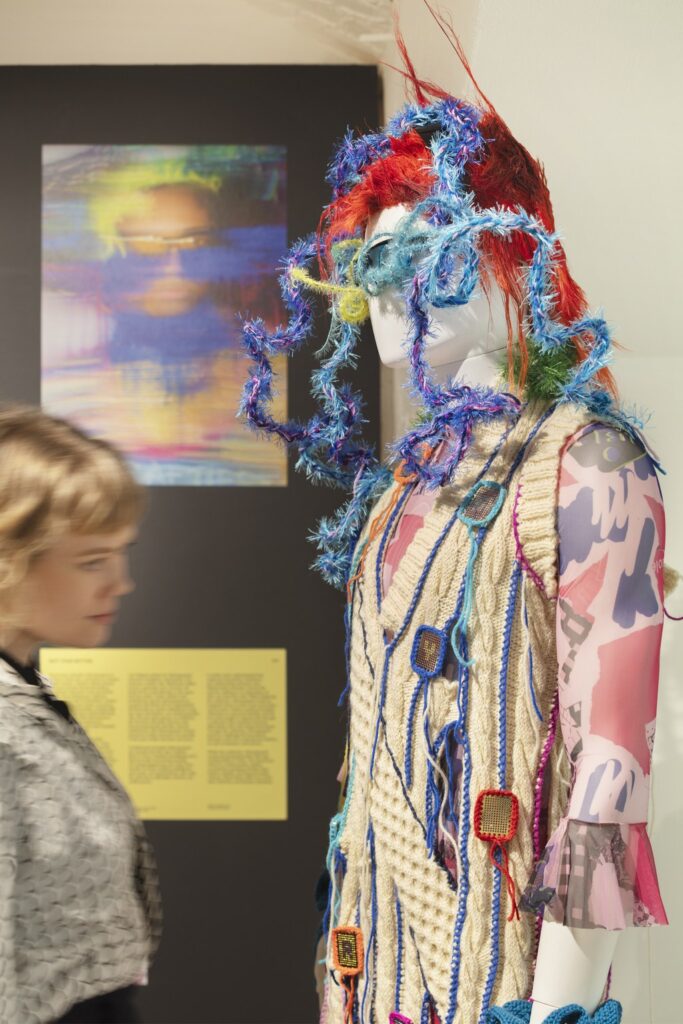
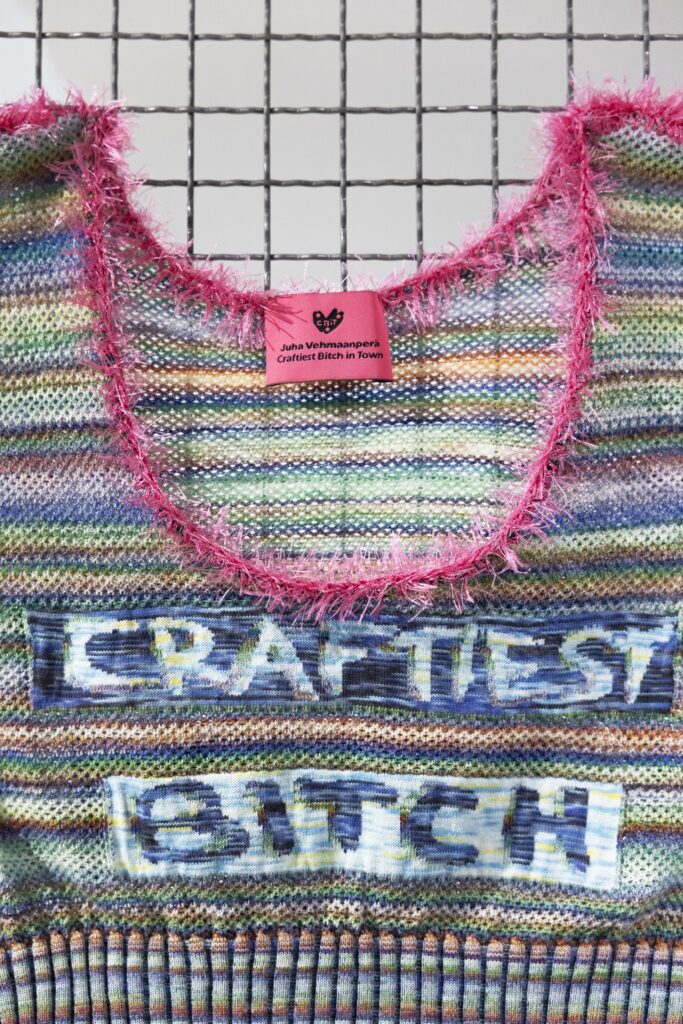
Knit artist Juha Vehmaanperä’s first large-scale solo exhibition will open in February 2026 at the Architecture and Design Museum’s Gallery.

Juha Vehmaanperä is a knit artist based in Helsinki. Vehmaanperä’s work focuses on slow fashion, queer theory, and craftsmanship. They create projects that combine traditional handicraft techniques with modern approaches and technologies.

Vehmaanperä’s practice is characterized by a sense of community, the promotion of DIY culture, and the renewal of traditions.

Vehmaanperä holds a Master of Arts degree from Aalto University’s Fashion, Clothing and Textile Design program, and has worked as a teacher in several art and design schools, including Aalto University, Teho-Opisto, and the Helsinki Workers’ Institute.

Vehmaanperä’s work has gained wide international recognition: their pieces have been exhibited at the Hyères Fashion Festival in France, Dutch Design Week, Pitti Filati in Italy, New York Textile Month, and several other major design and art exhibitions across Europe. In addition, Vehmaanperä has worked as an intern in the knitwear team at Acne Studios in Stockholm, Sweden.

In November 2025, Vehmaanperä was awarded the Taito Finlandia Prize of the Year.

The exhibition presented at the Museum of Architecture and Design in 2026 is Vehmaanperä’s first large-scale solo exhibition. This immersive show brings together key works from recent years, material experiments, descriptions of working processes, and participatory community projects. The exhibition will open at the Architecture & Design Museum on 20 February 2026.

Photo: Mortti Saarnia

Saara Suojoki appointed Director of Communications and Brand at the Architecture & Design Museum Helsinki

Saara Suojoki has been appointed Director of Communications and Brand at the Architecture & Design Museum Helsinki. Suojoki will take up the position on 1st March 2026.

In this new role, Saara Suojoki will be responsible for developing the museum’s societal impact, brand communications, and the overall museum experience. The position has been created to strengthen both the domestic and international recognition of the Architecture & Design Museum as it transitions towards its new building, set to open in Helsinki’s South Harbour in 2030.

“The future of the Architecture & Design Museum is a societal mission for us. Suojoki’s vision for brand communications supports our goal of becoming an internationally unique museum well before the opening of our new building. They bring with her a strong experience and expertise in engaging diverse stakeholders around a shared vision and in building the museum’s impact holistically and sustainably,” says Museum Director Pilvi Kalhama.

Saara Suojoki is transferring to the museum from her position as the Development Director at EMMA – Espoo Museum of Modern Art. Prior to this, she held senior marketing and communications positions at major museums in the Helsinki metropolitan area, including HAM Helsinki Art Museum from 2014 to 2017 and the Ateneum Art Museum from 2006 to 2014.

“I see the new Museum of Architecture and Design as a shared project of all Finns. It is inspiring to take part in creating a new kind of museum that speaks to everyone. My goal is to make the museum’s distinctiveness and uniqueness even more visible on the journey towards the new museum. By strengthening the meaningful museum experience, we will also support the museum’s growth and role in this time. Together, we will make the museum a phenomenon,” says Saara Suojoki.

The new Museum of Architecture and Design

The new Museum of Architecture and Design is expected to open in 2030 in Makasiiniranta, located in Helsinki’s South Harbour. The results of the anonymous international design competition for the museum building were announced in September 2025, with JKMM Architects, renowned for their museum architecture, selected as the winner. The new museum aims to provide a setting for world-class museum activities and to strengthen the role of architecture and design as integral parts of society.

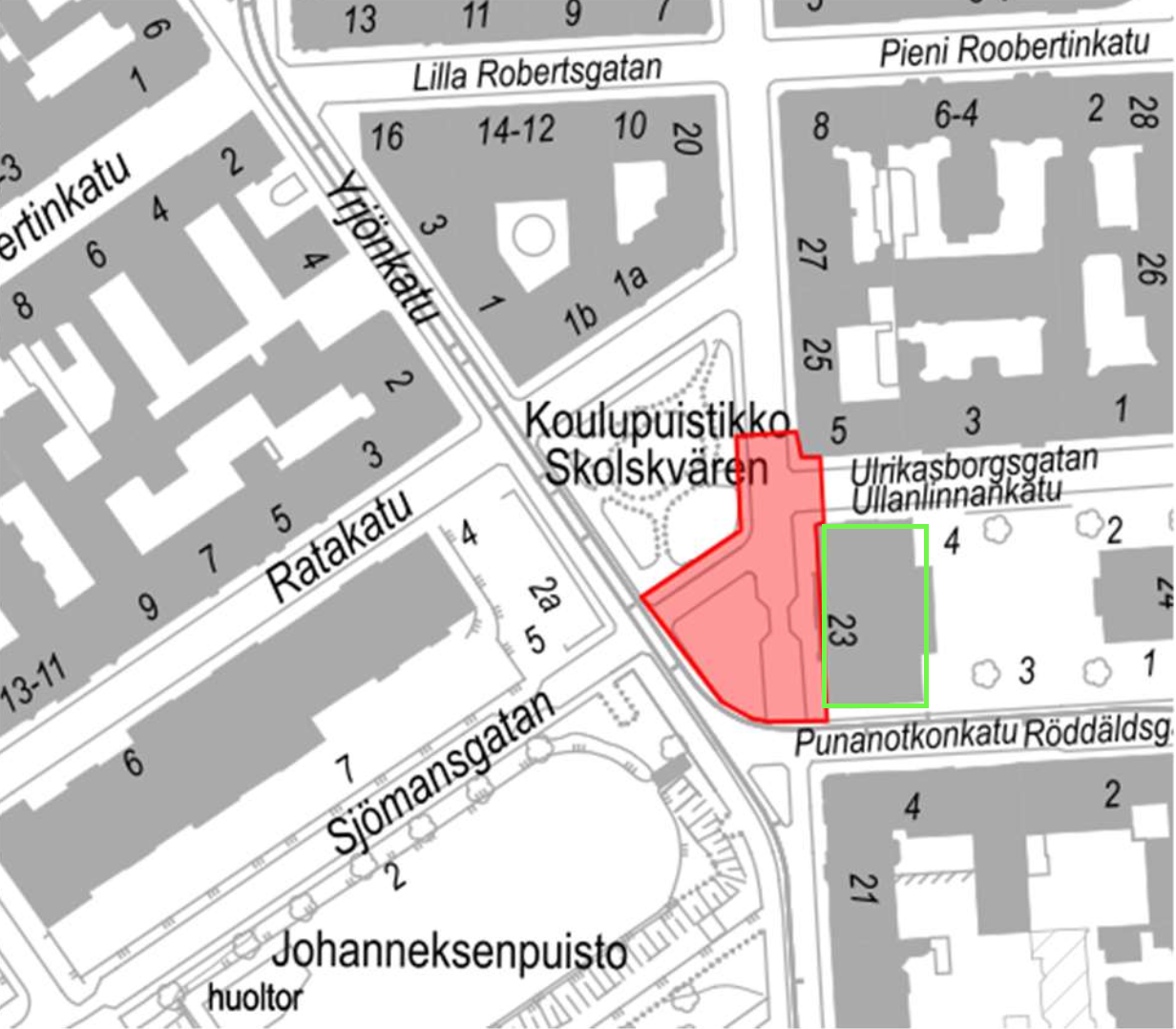
Until the new museum is completed, the Architecture & Design Museum will continue to operate at Korkeavuorenkatu 23, Helsinki.

This autumn’s programme includes Winner! – an exhibition presenting the results of the design competition for the new museum – and Escape to Moominvalley, which explores in an unprecedented way Tove Jansson’s real-life environments in relation to the spaces of Moominvalley. Check out what’s on currently at: admuseo.fi/eng

Photo: Anni Koponen