Aalto Design: exhibition texts

From this page you can find the texts of the Aalto Design – Shapes of Wellbeing exhibition. You can browse them from your own device while exploring the exhibition or read them again with a new perspective after your visit.

Aalto Design – Shapes of Wellbeing

The buildings and objects designed by the most celebrated figures of Finnish architecture and design – Aino Aalto (1894–1949), Alvar Aalto (1898–1976), and Elissa Aalto (1922–1994) – are regarded as classics that helped renew the principles of European modernism. Rather than focusing solely on functional efficiency and visual clarity, the Aaltos placed holistic human wellbeing at the heart of their design approach. The Aaltos’ philosophy of good design emerged gradually, taking shape over time in both the practice of their office and in Alvar Aalto’s written work and public statements. Paimio Sanatorium (1929–33) – Aino and Alvar Aalto’s international breakthrough – marked a decisive turning point in their careers. From this point onward, they began to move away from strict rationalism and its emphasis on efficiency and clarity, instead prioritizing the “ordinary person” and the psychological dimensions of human experience.

For the Aaltos, design was inherently holistic. Materials, details, light, and site sensitivity were not secondary considerations but fundamental elements of the design process. The materials they selected, for example, were intended to support both psychological and physical wellbeing.

Nature was a vital source of inspiration and wellbeing in their work. A key tenet of their thinking was the pursuit of balance between nature, people, and the built environment. They understood architecture as a means of bridging the human-made and natural worlds, weaving this relationship into everyday life.

These ideas are reflected in their distinctive design language. As Alvar Aalto observed, “form is a mystery that resists definition, yet makes people feel good – producing a different kind of wellbeing than mere social welfare.”

This exhibition traces the Aaltos’ creative development from Paimio Sanatorium toward the more expansive conception of wellbeing that came to define their work in the 1950s. One of its earliest fully realized expressions is Villa Mairea (1938–39).

Visitors are invited to reflect on what the Aaltos’ insights might offer today as society seeks ways to foster wellbeing – both in everyday life and on a planetary scale.

Wellbeing Through Materials: Bentwood Furniture  

The Aaltos favored wood in their furniture designs, appreciating its warmth, tactile appeal, and soothing visual and acoustic qualities – characteristics that stood in sharp contrast to the shiny steel tubing widely used by other designers of the time.

Because the angular form of raw timber did not naturally contour to the human body, Alvar Aalto collaborated with cabinetmaker Otto Korhonen to develop innovative methods for bending timber and plywood into unprecedented shapes using glue and hot steam. These experiments produced the now-iconic Paimio Chair and established an efficient, groundbreaking process for the mass production of bentwood furniture.

The chairs on display illustrate the Aaltos’ lifelong, evolving engagement with their materials. Their early designs from the 1930s forced the wood into bold, experimental forms, pushing the limits of timber and plywood. By the 1950s, their approach had become more organic: fan-shaped, or X-shaped, legs enabled more natural joinery, reflecting the growth patterns of trees and the interweaving of plant fibers.

Alvar Aalto’s bentwood relief panels further demonstrate this maturation process, grounded in long-term experimentation with the material’s properties.

Wellbeing Through Landscape: From Monumentality to Dialogue with Nature 

One of the Aaltos’ key insights was that holistic engagement with the landscape fosters both aesthetic and psychological wellbeing. Their evolving dialogue with nature matured significantly between the 1930s and the 1950s.

Paimio Sanatorium (1929–33) reflects Alvar Aalto’s 1920s idea that human intervention can refine the landscape: the building and its immediate surroundings form a consciously shaped entity, distinct from natural formations. The sanatorium rises as a towering white monument amid the pine forests of Southwest Finland.

By contrast, Villa Mairea (1938–39) embodies an architecture more deeply integrated with the site’s natural topography, vegetation, and local context. Terraces and canopies create a gradual transition from interior spaces to the surrounding landscape. Here, nature is treated as a pre-existing, holistic entity that the architecture seeks to understand and harmonize with, rather than reshape.

Säynätsalo Town Hall (1949–52) marks a further evolution. The Aaltos not only adapted the architecture to the existing terrain but also introduced new landforms: the raised lawn in the courtyard is an artificial hill that accentuates the site’s natural elevation contrasts. Unlike Paimio Sanatorium, this radical intervention does not oppose nature; instead, it adds a new layer that extends and complements the topography.

Forgotten Ideals? The Helsinki City Centre Plan, 1959–73

In 1959, the Aalto practice was commissioned to design a new city center plan for Helsinki. Planning had been underway for decades, yet the only tangible outcome until then was the decision to abandon the filling of Töölönlahti Bay. Helsinki can be grateful for that choice: today, the bay’s waterside landscapes form an important recreational area that supports the wellbeing of its residents.

Surprisingly, Alvar Aalto described Töölönlahti as a “worthless copy of a Karelian forest pond.” He proposed transforming the eastern part of the bay into a highway and covering the southern section with a concrete deck. Hesperianpuisto Park, in his vision, would be lined with a “pearl string of cultural buildings,” their façades reflected in the water like Venetian palaces.

Aalto was famously a master of rhetoric, but would this plan have created an environment genuinely conducive to wellbeing? In advancing these bold ideas, he seems to have set aside the principles that shaped the office’s most celebrated works. Although the plan was further developed, it may ultimately have been fortunate that it was never realized, becoming “another cross in a graveyard of heroic urban plans,” as art historian Riitta Nikula later described Töölönlahti.

Wellbeing Through Site Sensitivity: Architecture in Harmony with Nature

The architectural drawings on display trace the evolution of the Aaltos’ work and their growing sensitivity to the site’s natural surroundings.

Paimio Sanatorium (1929–33) – an early milestone in their career – stands out distinctly from the natural terrain, reflecting a functionalist approach to landscaping. Here, the pine forest primarily serves to support patient recovery.

The Terraced House at the Kauttua Ironworks (1937–38) in Eura marks a shift toward organic integration. Its low-rise, tiered form follows the slope of the esker, while yards, terraces, and preserved mature pines create a gentle transition between the built environment and untamed nature.

Similarly, the workers’ housing at Sunila Pulp Mill (1936–38) harmonizes with the terrain’s natural contours, fusing architecture with local topography.

Villa Mairea (1938–39) represents the epitome of this dialogue between architecture and nature. Here, the landscape is brought inside, and the built and natural worlds are fused as one. Striking interior details, such as the wooden colonnade on the main staircase, echo the rhythms of the surrounding pine forest, seamlessly blending interior and exterior.

Site sensitivity remains a hallmark in later works, including those in urban contexts. In Finlandia Hall’s congress wing (1975), the building’s undulating façade preserves mature trees and nestles against the bedrock, engaging respectfully with the natural site without dominating it.

A Total Work of Art: Villa Mairea 1938–39  

In Villa Mairea, the Aaltos’ architectural vision reaches its first fully mature expression. Designed for Maire and Harry Gullichsen, the project granted Aino and Alvar Aalto exceptional creative freedom, unconstrained by financial limitations or stylistic demands imposed by the client. The result is one of modern architecture’s most iconic total works of art.

The villa is more than a house: it is a carefully composed dialogue between the built and natural environment. Interior spaces flow seamlessly into the garden, which in turn merges with the surrounding pine forest. The rooms unfold with an organic rhythm, echoed in forest-like architectural elements such as the load-bearing columns and the irregularly grouped wooden poles framing the staircase. Materials and details are chosen to engage the senses, creating an intimate, welcoming atmosphere, subtly enriched by Japanese influences.

Nearly ninety years on, what can this luxury residence teach us today, as we navigate multiple crises that challenge our wellbeing?

Architecture that nurtures wellbeing does not depend on extravagant budgets; it begins with an understanding of what constitutes a good life. In this respect, the Aaltos were pioneers. Their work invites us to consider whether these same principles might still offer guidance in addressing contemporary challenges to wellbeing on a global scale.

7. First Steps in Architecture of Wellbeing: Paimio Sanatorium (1929–33)

The Paimio Tuberculosis Sanatorium is a landmark of modernist architecture, conceived specifically as an instrument for healing. When Alvar and Aino Aalto won the competition in 1929, they were deeply influenced by international functionalism, emphasizing simplicity of form and the building’s intended function. Yet Paimio Sanatorium marked a turning point in their approach, foreshadowing a shift from strict rational efficiency toward design attentive to human psychology and sensory experience.

The sanatorium became a “medical instrument,” designed not just to house nursing facilities but to actively support recovery. This intention is most evident in the patient wards, conceived from the horizontal perspective of someone lying down. To reduce glare, the ceilings were painted darker than the walls. Lighting was indirect and soothing, and washbasins were designed to dampen the sound of running water, whether sitting or standing. Every detail was carefully considered for its effect on the patient’s experience, promoting rest and recuperation.

Ilona Sagar: Other Actors

How does Aino and Alvar Aalto’s vision of healing architecture resonate today, now that Paimio Sanatorium is no longer a hospital?  

Other Actors is a three-channel video installation by London-based artist Ilona Sagar. It explores the links between bodies and buildings, health and architecture, through the lens of Paimio Sanatorium.  

At the time of filming, the sanatorium is at a significant moment in its transition from hospital to a new purpose. As restoration progresses, the film examines its status as a building in flux. Notions of care and maintenance are central to the film. As time moves and agendas change, so does what is being maintained, what survives and what is valued?  

Other Actors asks us to consider what we do with the architectural legacies of modernism that linger in our cultural imaginary, and how we can platform those who would normally be hidden behind its visual façades.  

Ilona Sagar created Other Actors in close collaboration with those who have lived and worked at the sanatorium, including the former maintenance staff, workers at the furniture manufacturer Artek, and surviving architects of the Aaltos’ design team. The film also features prominent theorists Beatriz Colomina, Heini Hakosalo, and Peter Stadius. Other Actors is informed by collaboration with the Aalto University School of Engineering, the Kalasatama Undocumented Migrants Clinic, as well as the Tuberculosis Research Group at Leicester University and Imperial College London, highlighting an urgent contemporary perspective on a disease often thought to be a relic of the past.

Wellbeing Through Form: The World’s Most Famous Vase?

Designed by Alvar Aalto, the Aalto Vase embodies his holistic approach to design. Its form exemplifies “organic modernism,” favoring asymmetry and freely undulating lines that depart radically from the strict geometrical functionalism of its time. Aalto harnessed the natural properties of glass – its translucency, reflectivity, and malleability – to create an object that appeals to both the eye and the sense of touch.

Beyond aesthetics, the vase’s form is intimately tied to its function and human sensory experience. For Aalto, design was inseparable from wellbeing: he believed objects should soften the harshness of modern environments, introducing the rhythms of nature and sensory pleasure into everyday life. The Aalto Vase thus represents a unique fusion of handcrafted serial production, organic form, and human-centered design.

Aalto established his reputation as a glass designer in the 1930s, a period when many architects were actively engaged in industrial design. His collaboration with Karhula-Iittala began with his victory in the company’s 1936 design competition, which led to the creation of what would become his most iconic glass object.

Wellbeing Through Brick: “Architecture is the Transformation of a Worthless Stone into a Nugget of Gold.”

Alongside his extensive use of wood, brick became an increasingly prominent material in the work of Alvar Aalto as his career progressed. In the 1930s, exposed brick was largely reserved for industrial buildings, but by the 1950s – often rightly described as Aalto’s “red-brick period”– it had assumed a focal architectural role. For Aalto, brick was “a basic building block in creating a socially appealing environment.”

The Baker House Dormitory (1946–49) at the Massachusetts Institute of Technology marked the beginning of this phase. There, Aalto sourced bricks of deliberately “poor quality” from a Canadian factory, valuing their subtle variations in tone and texture for the rich, tactile surfaces they produced. Similarly, the bricks for Säynätsalo Town Hall (1949–52) were fired and laid according to his precise specifications, with variation in tone and texture deliberately preserved.  

Aalto described form as a mystery capable of generating a sense of wellbeing. At Baker House, the undulating façade was realized through the expressive use of standard brick. Yet to fully explore the material’s potential, he developed an entirely new brick type that expanded its expressive range and heightened its sensory appeal. This exploration reached its culmination in Helsinki’s House of Culture (1955–58), where Aalto’s enduring engagement with brick found its most compelling architectural expression.

11. Wellbeing Through Light: Bilberries, Turnips, Beehives, and Hand Grenades  

For Aino Aalto, Alvar Aalto, and Elissa Aalto, light was a fundamental element of architecture. Early in their careers, Aino and Alvar recognized the value of directing natural light obliquely into interior spaces. A compelling early example is the reading room of Viipuri Library (1935), where cylindrical skylights bathe the space in even daylight while eliminating glare. At the same time, they understood the importance of artificial lighting for everyday life and psychological wellbeing, particularly in the dark conditions of the Nordic climate.

In the 1950s, the Aaltos’ approach to light became increasingly refined, both technically and atmospherically. Their lighting designs – especially for public buildings – combined natural and artificial light with remarkable ingenuity, often introducing angled daylight through sculptural skylights. The near-monastic atmosphere of Säynätsalo Town Hall, for instance, emerges from the interplay of softly filtered natural light, restrained artificial illumination, and textured brick surfaces.

During this period, the Aaltos also developed a wide range of lighting fixtures that expanded their spatial vocabulary. Beyond their primary function, pendant lamps were positioned to articulate space, acting as subtle dividers and establishing a visual rhythm. A distinctive feature of Aalto lighting is its self-illuminating quality: the fixtures themselves glow, inviting the eye to linger, much as an Aalto door handle or handrail invites the touch.

Aalto Public Spaces: An Architect’s Task Is to Create Paradises on Earth.  

Welcome to the Aalto Lounge. Here, visitors are invited to touch and directly experience designs by Alvar Aalto.

Aalto maintained that “the fundamental challenge of architecture is not that of achieving external, formal perfection, but rather of creating a pleasing environment through thoughtful simplicity that meets human biological needs.” For him, a well-designed public space was an essential source of collective wellbeing.

Elements such as light fixtures, door handles, railings, and other details were never secondary considerations for the Aaltos, but integral components in shaping an emotionally resonant environment. Every aspect – from the interplay of forms and materials to the use of natural light, framed views, and even vegetation – was carefully orchestrated to engage all the senses.

Concerned with the needs of the “ordinary person” in an increasingly mechanized modern world, Aalto saw it as the architect’s responsibility to “create paradises on Earth.” The Aalto Lounge celebrates the public spaces designed by the Aaltos – their furnishings, materials, and considered details – and, in doing so, affirms the enduring value of design in fostering wellbeing.

Library

Welcome to the Aalto Lounge. Here, visitors are invited to touch and directly experience designs by Alvar Aalto.  

Choose a book, sit down, and read on a chair designed by Aalto. When you are finished, please return the book to the shelf.

Thank you and enjoy your visit!

Hands-on Exploration Space 

“Whenever we stayed at the house, we always had the opportunity to engage in dialogue with brick.” – Alvar Aalto

The Muuratsalo Experimental House (1952–54), designed by Alvar and Elissa Aalto as their summer residence, functioned as a site for architectural experimentation. Inspired by the layout of ancient atrium houses, it provided a setting in which to explore the expressive and structural potential of brick and ceramic tiles under real-life conditions.

The walls and floor of the atrium courtyard – open to the surrounding landscape on one side – were divided into approximately fifty test patches, where a wide range of bricks and ceramic tiles were laid in varied arrangements. The Aaltos examined the properties of different brick types and tested the durability of various mortars, while also experimenting with unconventional structures and unexpected material combinations. This ongoing dialogue between architects and brick made the house a truly unique environment.

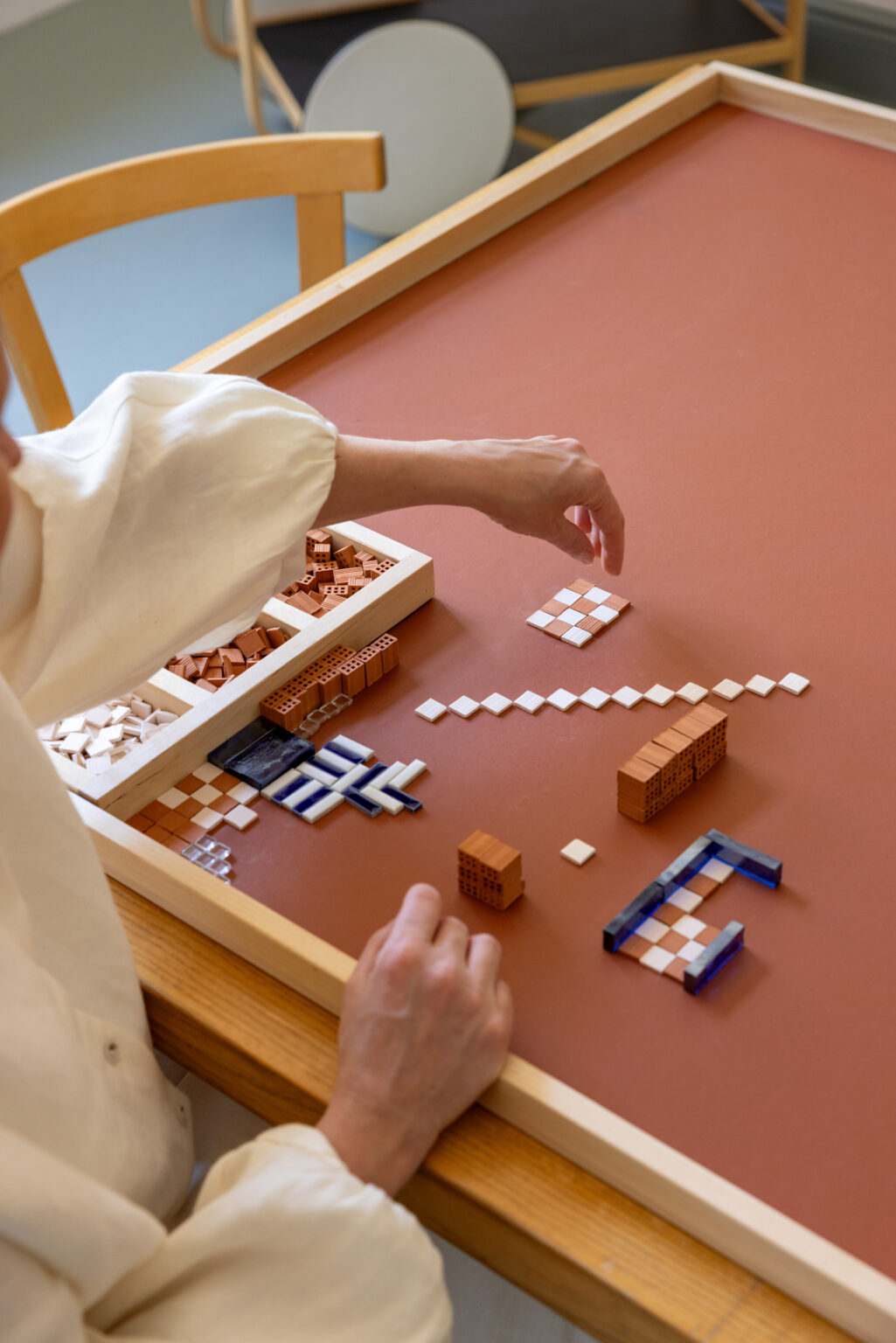
We invite you to take inspiration from the photographs and explore the materials used by the Aaltos – brick, ceramic tile, glass, and wood. This exhibition highlights the many inventive ways in which these materials were employed in their work.

Start your own experiment and play. Arrange the materials on the tabletop to create patterns or forms, or continue a composition begun by someone else. You may leave your creation for others to enjoy, dismantle it and return the materials, or photograph your work to share on social media.

Reflect as you explore:

  • What did it feel like to experiment and play?
  • What kinds of responses did different patterns or forms evoke?
  • Do the materials seem to invite you into a dialogue?
  • How do different materials and shapes affect your sense of wellbeing?
  • You may adjust the brightness of the room’s lighting here.
  • This booklet is available to accompany your exploration of the exhibition.  
Kaj Franck Retrospective to Tour in Japan

The retrospective Kaj Franck – Timeless Finland Design presents Kaj Franck’s work on an unprecedented scale in Japan. The exhibition begins its two-year tour of Japan at the Oita Prefectural Art Museum on Saturday, April 25, 2026. Produced by Asahi Shimbun in collaboration with the Architecture & Design Museum Helsinki, the exhibition traces Franck’s career from his early works to his later production. A special emphasis is placed on Franck’s relationship with Japanese culture, explored through his three trips to Japan.

More than 250 works from the collections of the Architecture & Design Museum are on display. The exhibition has been curated on behalf of the museum by exhibition curator Harry Kivilinna.

A Major Retrospective Showcasing a Cornerstone of Finnish Design

Kaj Franck – Timeless Finland Design offers a comprehensive overview of Kaj Franck’s work across different periods. The exhibition includes works designed for the Arabia and Nuutajärvi factories: mass-produced ceramics and glass, as well as unique art glass pieces. Alongside his clean-lined and minimalist forms, the exhibition also presents Franck’s earlier work, such as printed textiles and wooden toys from the 1940s.

From the mid-1960s onwards, art glass becomes a central focus. The glass objects represent numerous techniques that Franck developed in collaboration with master glassblowers at Nuutajärvi.

The influence of Japan on Franck’s design language is evident, for example, in several ceramic objects he designed for Arabia. The exhibition is complemented by an extensive selection of sketches and photographs from the Kaj Franck archive of the Architecture & Design Museum, offering insights into his working process and thinking.

“Kaj Franck is one of the best-known Finnish designers in Japan, and Timeless Finland Design is his first major retrospective in the country. The exhibition highlights his deep interest in Japanese culture, which led him to make three trips to Japan. It showcases his pioneering thinking, in which design served as a means of addressing societal challenges”, says the exhibition’s project manager Tomoe Takagi from Asahi Shimbun.

“Kaj Franck – Timeless Finland Design is already the third touring exhibition on Finnish design in Japan produced by the Architecture & Design Museum in collaboration with Asahi Shimbun.  Marimekko-Design, Fabric, Lifestyle (2015–2017), focusing on Marimekko’s history and present day, and Iittala – The Stars of Finnish Glass (2022–2024) were both popular touring exhibitions. The exhibition opening will undoubtedly continue along the same path of success. Finnish design seems to hold a special place in the hearts of the Japanese,” says Kivilinna.

The exhibition also features several other Finnish designers, such as Oiva Toikka, Vuokko Nurmesniemi, Heikki Orvola, and Harri Koskinen, whose careers or work were directly influenced by Franck.

The exhibition begins its two-year tour of Japan at the Oita Prefectural Art Museum on Saturday, 25 April 2026. A Japanese-language publication, Kaj Franck – Timeless Finnish Design, published by Asahi Shimbun and edited by Tomoe Takagi, will be released in conjunction with the exhibition.

Exhibition Tour 

    • April – June 2026: Oita Prefectural Art Museum
    • July – September 2026: Iwami Art Museum
    • October – December 2026: Museum Eki KYOTO
    • January – March 2027: Tokyo Opera City Art Gallery

Additional venues will be announced later. 

Kaj Franck

Kaj Franck (1911–1989) is one of Finland’s most internationally renowned designers, whose beautifully practical objects continue to inspire new generations of designers. Franck graduated in 1932 as an interior architect from the Central School of Industrial Arts in Helsinki.

During the 1930s and 1940s, he worked in various roles in interior design companies and designed printed textiles, among other things, for the Helsinki Dye Works. In 1948, the Arabia ceramics factory appointed Franck as its artistic director. His best-known tableware designs for Arabia include Kilta (1953) and its successor Teema (1981).

In 1951, Franck became the artistic director of the Nuutajärvi glassworks, and from the mid-1950s onwards glass became his primary material. In the 1960s, he worked as a teacher at the Institute of Industrial Arts in Helsinki, significantly influencing an entire generation of designers. After ending his teaching career, Franck focused on art glass and experimental glassmaking techniques at Nuutajärvi.

The Architecture & Design Museum’s extensive Kaj Franck collection consists of more than 7,000 objects, photographs, and drawings.

Industry Muscle Promo Video Wins Award at Voitto

The promotional video for the Industry Muscle exhibition presented in Venice has won first prize in the Music and Sound Design category at the Finnish advertising film competition Voitto.

The best advertising films of 2025 were awarded at the Voitto Gala held at the Old Student House in Helsinki on Friday, 6 March 2026. The jury praised the video in particular for its strong understanding of the dramaturgical power of sound.

The award-winning video served as the international promotional material for the Industry Muscle exhibition, highlighting its key themes through powerful audiovisual storytelling.

The Voitto competition annually honors the best creators and productions in Finnish advertising film.

The Architecture and Design Museum produced the exhibition Industry Muscle: Five Scores for Architecture for the Nordic Pavilion at the 19th International Architecture Exhibition of La Biennale di Venezia. The Biennale was open to the public from 10 May to 23 November 2025.

Created by performance artist Teo Ala-Ruona together with their working group, the exhibition examined the modern built environment from the perspective of the trans body. Combining architecture, performance art, and installation, the project proposed five exercises for the architecture of the future. The exhibition was curated by architect Kaisa Karvinen.

The video was filmed at a concrete factory in Helsinki, where the exhibition installation was built from concrete, steel, and an old sports car. The video also offered a first glimpse of the performance presented in Venice. The performers are Ala-Ruona, Kid Kokko, and Caroline Suinner.

The video was produced by Cocoa and directed by Taito Kawata, whose previous work includes the Netflix series Dance Brothers.

Video Production Team

Director – Taito Kawata
Executive Producer – Ilona Malinen
Music & Sound Design – Akseli Soini / El Camino
Music & Sound Design – Petja Virikko / El Camino
Sound Design / Original score for Industry Muscle: Tuukka Haapakorpi
Director of Photography – Tuomas Nurmi
Production Manager: Samuli Hilkamo
Production assistant: Juuli Nyberg
Production Assistant / Gaffer – Eemi Lehto
Light Technician – Tiia Hyyryläinen
1st Assistant Camera – Henrik Leppänen
Hair & Makeup – Emma Janhonen
Grip – Oskari Jokinen
Grip Assistant – Pepe Uimonen
Set Design – Teo Paaer
VFX Artist – Juho Lähdesmäki
Colorist – Joni Kuusisto

Performers
Teo Ala-Ruona
Caroline Suinner
Kid Kokko

Special Thanks
Jan Tuomisto / Studio Lupara Oy
Angel Rentals / Roope Ruuska
Bongobongo / Joonas Saine
Vihdin Betoni Oy

Production Company
Cocoa (@wearecocoa)

Upcoming exhibition explores Aalto architecture and design through wellbeing

Aalto Design: Shapes of Wellbeing  
5 June 2026 – 3 January 2027  

In summer 2026, the Architecture and Design Museum Helsinki will present the architecture and design of Alvar, Aino and Elissa Aalto. The multidisciplinary exhibition Aalto Design: Shapes of Wellbeing boldly asks what these classics can contribute to contemporary discussions on the design of wellbeing.  

Opening in June 2026 at the Architecture and Design Museum, Aalto Design: Shapes of Wellbeing invites visitors to explore the Aaltos’ legacy from the perspective of wellbeing.

 The exhibition highlights wellbeing as the Aaltos’ major contribution to Western architectural modernism and examines how their work and philosophy approach it as a balance between people, nature, the built environment, and materials. It connects the Aaltos’ idea of holistic wellbeing with contemporary thinking and the growing desire to understand wellbeing as extending beyond the individual to concern the whole planet.  

The exhibition is produced by the Architecture and Design Museum and curated by the Head of Research Petteri Kummala and the Exhibitions Curator Jutta Tynkkynen. The museum’s newly appointed Chief Curator, Carson Chan, has served as curatorial advisor. The curatorial concept brings together a diverse dialogue of presentation methods and materials, including drawings and scale models, furniture, glass objects and material experiments, as well as artworks. The exhibition also features rarely displayed items from the museum’s collections. 

Museum Director Pilvi Kalhama’s vision has been to introduce diverse modes of storytelling and presentation that encourage new interpretations of familiar materials. The exhibition includes, among other works, the multi-channel video installation Other Actors (2025) by London-based artist and researcher Ilona Sagar. The work explores the relationships between body and building, and between health and architecture, at the Paimio Sanatorium designed by the Aaltos.

“On our journey towards a new Architecture and Design Museum, we want to find ways to experience and interpret architecture and design in experiential and multidisciplinary ways,” says Pilvi Kalhama.

The Aalto Lounge, designed by exhibition architect Linda Bergroth, offers a calm space for rest and reflection and invites visitors to explore how being in a space affects their body and mind in the presence of authentic Aalto objects. The lounge also functions as an experiential meeting and event space available for hire. 

The exhibition is based on works by Alvar, Aino and Elissa Aalto from the Architecture and Design Museum’s collections, supplemented by loans. The exhibition’s partner is the Alvar Aalto Foundation. 

Further information about the exhibition and public programme will be announced at a later date.  

Notes for editors

Alvar Aalto (1898–1976) was a Finnish architect and designer who rose to iconic status both nationally and internationally. He is known as a key pioneer of humane modernism. Aalto’s architecture has been proposed for inclusion on UNESCO’s World Heritage List, with a decision expected in 2026.

Aino Marsio-Aalto (1894–1949) was a nationally and internationally recognized architect, designer, and interior architect, as well as one of the founders of Artek. She worked alongside her spouse as an equal partner in design and, as Artek’s first artistic director, created the company’s distinctive style. As a designer, Aino Aalto is especially known for her glassware.

Elissa Aalto (1922–1994) was a Finnish architect and Alvar Aalto’s longtime collaborator and spouse, who had a significant influence on the operations of Aalto’s office in the postwar period. From the 1950s onward, she played a central role in the firm’s major building projects. After her husband’s death, Elissa led the office, completed unfinished projects, and participated in planning the restoration of Aalto’s buildings.

For materials, images and interview requests

Ilona Hildén 
Communications Specialist 
Architecture & Design Museum Helsinki 
ilona.hilden@admuseo.fi 
+358 443582175 

Image: Other Actors, Ilona Sagar, 2025.

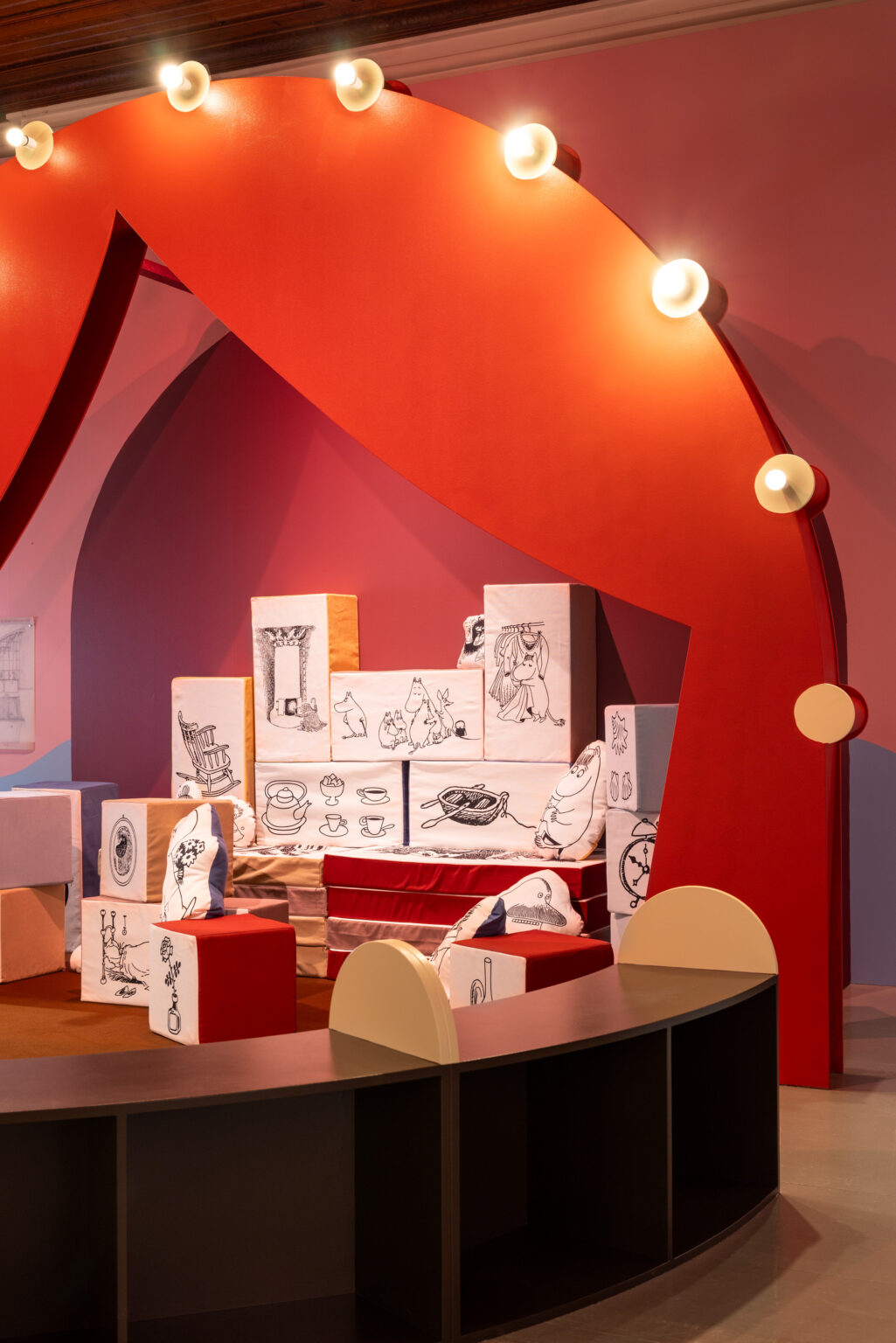
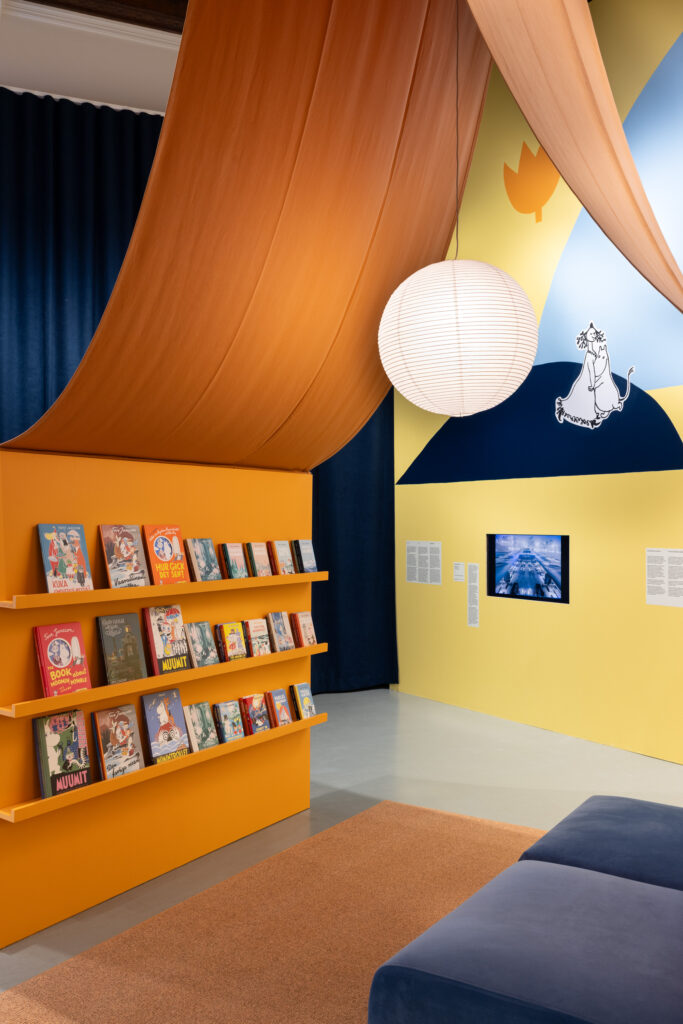
A new exhibition intro introduces the themes of Escape to Moominvalley

From January onwards, the Architecture and Design Museum will host regular exhibition intros for its main exhibition Escape to Moominvalley. The exhibition intros take place weekly on Tuesdays and Saturdays in several languages. The exhibition intros replace the previous open public guided tours of the main exhibition and allow more visitors to take part in these popular guided introductions.

The exhibition intro is a 30-minute guided introduction where visitors can sit back and listen as the guide presents the key themes and stories of the exhibition. A visual presentation combined with the guide’s expertise offers new perspectives and practical tips to help visitors get the most out of the exhibition at their own pace.

Before the exhibition intro begins, visitors have the opportunity to take part in the Escapism Poetry Game, where they can create their own poems and project them onto a screen. A smartphone is required to scan the QR code. Visitors are encouraged to arrive around 15 minutes in advance.

Participation in the exhibition intro is included in the price of a museum ticket.

Up-to-date schedules for the exhibition intros can be found in the museum’s event calendar.

Teo Ala-Ruona’s Industry Muscle Emerges as a Biennale Highlight in Venice 

The Nordic Pavilion’s exhibition Industry Muscle: Five Scores for Architecture drew exceptional attention at the 19th International Architecture Exhibition of La Biennale di Venezia, held from 10 May to 23 November, 2025. A large majority of the Biennale’s 300,000 visitors passed through the pavilion, which also gained strong traction in international media. The exhibition was curated by architect Kaisa Karvinen. Performance artist Teo Ala-Ruona was invited as the commissioned artist, who assembled a multidisciplinary team to conceive and deliver the work.  

Industry Muscle Proposed Five Scores for the Future of Architecture  

The starting point for Industry Muscle was the Nordic Pavilion itself. The pavilion, designed by Sverre Fehn, was completed in 1962 and it is celebrated as a landmark of modernism. In his work, Teo Ala-Ruona examined the design premises typical of the period through a trans-bodily lens. These also included the standardised body image and the fossil-fuel culture embedded in modernist thinking. Through performance and installation, the exhibition encouraged audiences to look at the pavilion and the modern built environment in a new way.  

The exhibition was structured around five scores – Impurity, Decategorisation, Performance, Techno-body, and Reuse – each posing a provocation for the architecture of the future. At the heart of these scores was a key question: could the body serve as a catalyst for reimagining architecture in a time of ecological crisis?  

“Modern architecture surrounds us, and its value is widely acknowledged. But we cannot approach our environment as the architects of that era did. Modernism was grounded in a standardised conception of the body and the assumption of inexhaustible natural resources. Industry Muscle challenges these paradigms”, notes curator Kaisa Karvinen.  

Developed with an extensive artistic team, the exhibition featured sculptural works, video installations and large-scale typographic paintings across the pavilion’s glazed facades. During the Biennale’s opening days, three durational performances translated the work into the language of bodies, compelling visitors to pause amid the bustle of the Biennale. A companion essay, Bodytopian Architecture, provided further theoretical framing.  

Watch Teo Ala-Ruona’s video interview

Read essay

Visit the exhibition page

International Media Spotlight on a Standout Exhibition  

The Nordic Pavilion received wide attention in the international media, with coverage reaching a total of 186 million readers. The exhibition was featured in outlets such as ArchDailyDezeenDomuse-FluxFriezeVogue ItaliaArchitect’s Journal, and Galerie, which named it one of the most compelling pavilions of the Biennale. Audiences and critics described the work as an intellectually challenging and emotionally resonant whole, as well as one of the boldest statements of the Biennale.  

Media coverage

During the Biennale’s opening days, three durational performances translated the work into the language of bodies. The dramaturgy of the performance was created by Teo Ala-Ruona and dramaturg Even Minn. The entire working group participated in the creation of the choreography. Performing: Romeo Roxman Gatt and Teo Ala-Ruona.

Each member of the working group contributed their own artistic input to the exhibition. The performance outfits were designed by fashion designer Ervin Latimer. Performing: Caroline Suinner. Photos: Venla Helenius.

Industry Muscle sculptures were created by scenographer and artist Teo Paaer. The soundscape was composed by sound artist Tuukka Haapakorpi. Performing: Kid Kokko (left), Caroline Suinner, Romeo Roxman Gatt and Teo Ala-Ruona. Photo: Venla Helenius.

The video works presented in the Industry Muscle exhibition were created by visual artist Venla Helenius. Romeo Roxman Gatt (left) and Kid Kokko perform. Photo: Venla Helenius.

The Industry Muscle Team  

The Industry Muscle exhibition was created by Teo Ala-Ruona together with architect A.L. Hu, scenographer and artist Teo Paaer, sound artist Tuukka Haapakorpi, dramaturg Even Minn, visual artist Venla Helenius, fashion designer Ervin Latimer, graphic designer Kiia Beilinson, and performers Kid Kokko, Caroline Suinner and Romeo Roxman Gatt. Each contributed a distinct artistic voice to the work.  

Learn more about Industry Muscle and the team

Teo Ala-Ruona and architect A.L. Hu’s essay Bodytopian Architecture provided the theoretical foundation for the work. The essay was available to read in the exhibition. Performing: Kid Kokko and Romeo Roxman Gatt. Photo: Venla Helenius.

Performing: Romeo Roxman Gatt (left), Teo Ala-Ruona (top), Caroline Suinner and Kid Kokko (bottom). Photo: Venla Helenius.

19th International Architecture Exhibition – La Biennale di Venezia  

The Venice Architecture Biennale is the world’s most influential platform for presenting contemporary architectural thought. The curator of the 19th edition, Italian architect, urban planner, engineer and researcher Carlo Ratti, invited participating countries to bring together diverse forms of intelligence to address the major challenges of our time. The Nordic Pavilion approached the main theme – Intelligens. Natural. Artificial. Collective.– through intimate, embodied experience.  

Industry Muscle sculptures were created by scenographer and artist Teo Paaer. Photo: Ugo Carmeni.

The car’s typographic paintings are the work of graphic designer Kiia Beilinson. Photo: Ugo Carmeni.

The Nordic Pavilion is located in a central spot in Venice’s Giardini park. The typographic window paintings that are part of the work Industry Muscle were created by graphic designer Kiia Beilinson. Photo: Ugo Carmeni.

Nordic Collaboration in the Nordic Pavilion  

The Nordic Pavilion is jointly owned by Finland, Norway and Sweden, with each country taking turns producing the exhibition. In 2025, production was led by the Finland’s Architecture & Design Museum Helsinki. The exhibition’s commissioner was Carina Jaatinen, working in collaboration with Karin Nilsson (ArkDes) and Yngvill Aagaard Sjöösten (National Museum of Norway). The curatorial team at the Architecture & Design Museum included curator Kaisa Karvinen and curatorial advisor Suvi Saloniemi. 

Upcoming: Juha Vehmaanperä’s knit art

Knit artist Juha Vehmaanperä’s first large-scale solo exhibition will open in February 2026 at the Architecture and Design Museum’s Gallery.

Juha Vehmaanperä is a knit artist based in Helsinki. Vehmaanperä’s work focuses on slow fashion, queer theory, and craftsmanship. They create projects that combine traditional handicraft techniques with modern approaches and technologies.

Vehmaanperä’s practice is characterized by a sense of community, the promotion of DIY culture, and the renewal of traditions.

Vehmaanperä holds a Master of Arts degree from Aalto University’s Fashion, Clothing and Textile Design program, and has worked as a teacher in several art and design schools, including Aalto University, Teho-Opisto, and the Helsinki Workers’ Institute.

Vehmaanperä’s work has gained wide international recognition: their pieces have been exhibited at the Hyères Fashion Festival in France, Dutch Design Week, Pitti Filati in Italy, New York Textile Month, and several other major design and art exhibitions across Europe. In addition, Vehmaanperä has worked as an intern in the knitwear team at Acne Studios in Stockholm, Sweden.

In November 2025, Vehmaanperä was awarded the Taito Finlandia Prize of the Year.

The exhibition presented at the Museum of Architecture and Design in 2026 is Vehmaanperä’s first large-scale solo exhibition. This immersive show brings together key works from recent years, material experiments, descriptions of working processes, and participatory community projects. The exhibition will open at the Architecture & Design Museum on 20 February 2026.

Photo: Mortti Saarnia

Official Trailer: Industry Muscle

Industry Muscle: Five Scores for Architecture continues Teo Ala-Ruona’s exploration of trans embodiment and ecology – now extending into the realm of architecture. Experience the exhibition at the International Architecture Biennale in Venice from May 10 to November 23, 2025 at the Nordic Countries Pavilion.

If the video doesn’t load properly, click here to watch the trailer.

The video was shot on location at a concrete factory in Helsinki, where the installation for the Venice exhibition was constructed using concrete, steel, and a sports car. In the video, we catch glimpses of the performance, featuring Teo Ala-Ruona, Kid Kokko, and Caroline Suinner. The video was produced by Cocoa and directed by Taito Kawata, whose previous work includes the Netflix series Dance Brothers.

The team

Director
Taito Kawata

Executive Producer
Ilona Malinen

Director of Photography
Tuomas Nurmi

Production Manager
Samuli Hilkamo

Production assistant
Gaffer Eemi Lehto

Light technician
Tiia Hyyryläinen

1st AC
Henrik Leppänen

MUAH
Emma Janhonen

Grip
Oskari Jokinen

Grip assistant
Pepe Uimonen

Set Design
Teo Paaer

Music & Sound
Akseli Soini / El Camino

Performers
Teo Ala-Ruona
Caroline Suinner
Kid Kokko

With special thanks to
Jan Tuomisto / Studio Lupara Oy
Angel Rentals / Roope Ruuska
Bongobongo / Joonas Saine
Vihdin Betoni Oy

Tuotantoyhtiö
Cocoa @wearecocoa

Petja Virikko / El Camino

VFX artist
Juho Lähdesmäki

Colorist
Joni Kuusisto

Fix: Care and Repair / Artists

For the exhibition FIX: Care and Repair, four new contemporary art pieces were commissioned through an open call. These works provided the impetus for curating other exhibition content. The selected artists are:


Jessica Andrey Bogush

Jessica Andrey Bogush (b. 1987) resides in Helsinki, Finland, and Berlin, Germany. They work with images and installations in which the fantastic and the familiar are indistinguishable.

Using circular materials and flaky compositions, Jessica tackles the contemporary state of images and objects, offering actions of interspecies appreciation. Their approach combines surprise and grotesque with care and consideration, focusing on the intersection of life and death, particularly within queer community and More-Than-Human Others.

In the FIX: Care and Repair exhibition Jessica Andrey Bogush welcomes you to explore the museum collections through an installation, focusing on the themes of care, exclusion and invisibility. Featuring contributions from curator and researcher Max Hannus and artist Ville Laurinkoski Jessica’s proposal explores the gesture of an invitation, bringing the question of what is to queer an archive and how caring for one often leads to the death of another.

Sini Henttu

Artist Sini Henttu (b. 1988) primarily works with video art, installations, and performances. In her works, Henttu explores the intersections of society and subjectivity through multimateriality. Often, the focal points of her pieces are the body and the various dimensions of touch. She is particularly intrigued by how materials affect us and how the affective experiences produced by objects feel in the body. Through her art, she aims to create spaces that examine different ways of experiencing.

In Henttu’s works for the FIX: Care and Repair exhibition, art and design seamlessly intertwine. Henttu’s video series Fantasman sylissä (In Phantasma’s Arms) invites imagining alongside chairs borrowed from the museums’ workspaces. The focal point of the piece, besides the objects themselves, is the sounds they produce and the affective experiences felt in the body.

Henttu graduated in 2022 from Aalto University with a master’s degree in Contemporary Design. The artist has participated in numerous solo and group exhibitions, residency programmes, as well as community-based and interactive performance work. Additionally, she has appeared as a video artist in various events, including Zodiak, Kiasma, Ateneum, as well as festivals.

Liisa Ryynänen

Liisa Ryynänen (b. 1994) is an architect focused on the history and theory of architecture, as well as being engaged in the field of visual arts. She explores and develops experimental presentation methods in architecture, and is interested in how they can aid in conceptualizing and sensing the environment in new ways. Ryynänen teaches architecture at Aalto University and has previously worked on architectural historical research projects in architectural firms. She graduated as an architect from the School of Arts, Design, and Architecture at Aalto University in 2020. Currently, she is pursuing a master’s programme in Practical Philosophy at the University of Helsinki.

In the FIX: Care and Repair exhibition Liisa Ryynänen’s piece Inventaario (Inventory) challenges us to reflect on our relationship with everyday office aesthetics, shabbiness, and wear and tear. Ryynänen asks how we could openly approach suspended ceilings or low-quality wall-to-wall carpeting added to the spaces by their users.

Helmi Kajaste and Petra Vallila 

Architect and musician Helmi Kajaste (b. 1986) is currently a doctoral researcher at Aalto University. Kajaste’s doctoral dissertation in architectural theory explores the concept of boundaries through the lens of cinema. Previously, she has addressed architecture and film in articles and in her book ‘Rakenna, kärsi ja unhoita’ [Build, Suffer, and Forget] published in 2020. Kajaste is also known as Draama-Helmi in the music scene. In 2023, she won the Teosto Prize for her album ‘Draama-Helmi kuistilla’.

For the FIX: Care and Repair exhibition Helmi Kajaste and poet Petra Vallila create a site-specific Siivousmusiikkia (Cleaning Music) sound installation for the museum space, combining spoken poetry and concrete (cleaning) music. The piece explores what sound constitutes interference and what belongs to the space.

Petra Vallila (b. 1983) is a poet, writer, and corporate communicator. For her, poetry serves as a research method to seek experiences and meanings that have not yet been articulated in factual texts. Through poetry, she aims to find freedom in negotiating things that are usually contractually defined. Vallila’s debut book ‘ehkä’ [Perhaps] was a nominee for the Helsingin Sanomat Literary Prize in 2022. The work shapes poetry around existence in a commercial company and a slightly unstable gaze built upon corporate language. Vallila graduated with a master’s degree in fine arts from the University of the Arts Helsinki in 2021. Leveraging her earlier master’s degree in political science, Vallila has for an extensive period held communication expert roles in multinational companies both in Finland and abroad.

‘FIX: Care and Repair’ is open at the Museum of Finnish Architecture and the Design Museum from April 26th, 2024, to January 5th, 2025